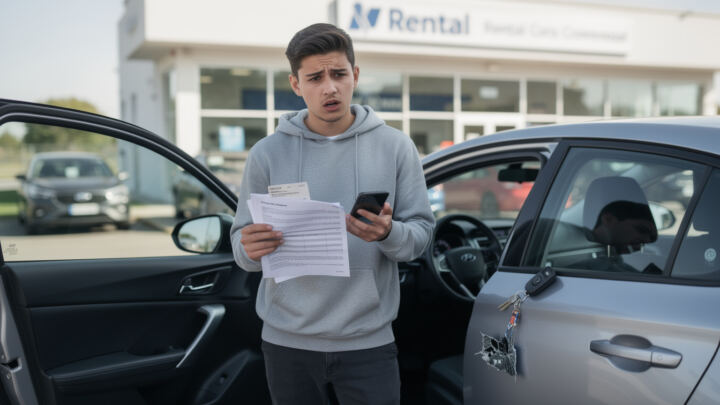
“I’ll just grab a car when I land.” That one sentence has quietly wrecked a lot of trips. For a first time renter, car rental looks simple on the surface—pick a date, pick a car, show up, drive away. But the real game is happening in the fine print, in the fuel rules, in the counter upsells, and in those awkward minutes when you’re tired, jet-lagged, and someone is asking you to sign a rental agreement on a screen you can barely read.
And in 2026, the stakes can feel higher than they used to. Pricing swings fast, inventory can be tight in peak weeks, and “little” choices (like where you pick up the car, whether you prepay gas, or which insurance box you click) can trigger hidden fees and nasty extra charges. The good news: most of the classic rental mistakes are predictable. If you know where people typically get burned—documentation, insurance, fuel, tolls, timing, and return rules—you can dodge the stress and keep your trip budget intact.
En bref
- 🗓️ Book early with free cancellation to avoid price spikes and sold-out categories.
- 🔍 Do a real car inspection (photos + slow video) at pickup and drop-off.
- 🛡️ Confirm insurance coverage through your auto policy and credit card before paying at the counter.
- ⛽ Don’t prepay fuel unless you’re sure you’ll return nearly empty; understand the fuel policy.
- 🧾 Watch for hidden fees: airport surcharges, toll packages, add-ons, young driver fees, and parking.
- ⏰ Know the late return rules and after-hours drop-off steps to avoid surprise billing.
Mistakes to Avoid When Renting Your First Car: Booking Too Late and Choosing the Wrong Pickup Location
Let’s follow a fictional traveler, Maya, who’s renting a car for the first time for a long weekend. She books her flight and hotel weeks ahead, then remembers the car two days before departure. Suddenly, rates are wild, the “economy” cars are gone, and the only options left are premium SUVs that cost more than her airfare. That’s not bad luck; it’s a very normal first-timer trap.
One of the biggest rental mistakes is assuming car pricing behaves like it did years ago. In busy travel periods, inventory gets thin and the cheapest categories disappear first. The fix is boring but effective: reserve early, and make sure it’s a deal with free cancellation. That way you’re protected if prices drop later, because you can rebook.
Why “book early, keep checking” beats “wait for a last-minute deal”
Here’s the move: lock something in as soon as your dates are firm, then set a reminder to check prices again a week or two out. If a better rate appears, you cancel and rebook. It’s the same discipline people use with flights—except many folks forget the car can break the budget.
Maya does this on her second trip. She books a compact car with free cancellation, then checks again later and finds a midsize for less because compact cars got popular that week. She switches and ends up with more trunk space for cheaper. Asking “does a bigger car cost less today?” sounds backwards, but it happens more often than you’d think.
Airport rentals: convenient, but often loaded with surcharges
Another money leak is automatically renting at the airport. Airport locations can tack on facility fees and concession charges. Sometimes it’s still worth it—especially if you’re arriving late or traveling with kids—but it shouldn’t be the default.
A smart alternative is checking off-airport branches. If the difference is big, the math may favor paying for a rideshare to a neighborhood location. Maya once saved enough to cover two tanks of gas just by taking a 12-minute ride to a city branch. The insight here is simple: convenience has a price tag, so compare before you commit.
Next up: the mistakes that happen after you’ve booked—when you’re standing next to the car and everything feels rushed.

Rental Car Mistakes at Pickup: Skipping Car Inspection, Missing Terms, and Getting Rushed
This is where most first-time renters lose control: the pickup counter and the parking garage. You’re tired, there’s a line behind you, and you just want keys. But the moment you drive off, you’ve basically agreed the car is in the condition stated on the paperwork—even if the paperwork is vague.
The most protective habit you can build is a thorough car inspection. Not a quick glance. A real walkaround with evidence.
Documenting condition: your best defense against surprise damage claims
Do a slow video from a few feet away, then close-ups of anything questionable: bumper scuffs, wheel rash, windshield chips, stains, torn upholstery. Get the roof too—hail damage disputes happen. Then snap still photos of the fuel gauge and odometer.
Maya once skipped this and got billed for a scratch she swears wasn’t hers. She had no proof, so she paid. On her next rental, she filmed at pickup and again at drop-off. When a “new” dent appeared in the claim email, she replied with timestamps. The charge disappeared. That’s the whole game: documentation turns a he-said-she-said into facts.
Don’t leave without understanding the rental agreement and return process
Your rental agreement isn’t just legal fluff; it controls the fees that show up later. Ask two quick questions before you roll:
- 🗝️ “What’s the exact drop-off procedure after hours, and where do I leave the keys?”
- ⏱️ “What counts as a late return—is there a grace period, and how is it billed?”
If nobody checks you in at return, your photos and video matter even more. Also, clarify whether the car needs to be returned to a specific row, whether you need to lock it, and what to do if the key drop is jammed. Those tiny logistics can trigger extra charges like “missing keys” or an extra day billed because the car wasn’t processed until morning.
Counter pressure and upsells: how to slow the moment down
Some agents are great, some are sales-driven, and some are just trying to move the line. Either way, you’re allowed to pause. If an upgrade is offered, ask the price. Asking doesn’t commit you. In overbooked situations, upgrades can be discounted or even free. The trick is to treat it like a menu: “How much?” then decide calmly.
From here, the next big trap is what you pay for—especially insurance and add-ons that sound necessary when you’re on the spot.
If you want a quick visual run-through of pickup checks, this helps set the rhythm before your trip.
Insurance Coverage Mistakes: Paying Twice, Declining the Wrong Protection, and Ignoring Loss of Use
Insurance is where first-time renters either overspend or under-protect themselves. The mistake isn’t “always buy” or “always decline.” It’s saying yes or no without understanding what you already have and what the rental company can charge.
Verify your auto policy before you assume anything
Your personal auto policy might extend to a rental car, but the details matter: does it cover collision, theft, and liability while traveling? Does it apply internationally? Does it cover the same vehicle type (some policies exclude certain vans or luxury classes)? A five-minute call to your insurer can prevent a costly assumption.
Maya learned this the hard way when traveling out of state. She declined coverage thinking her policy applied everywhere, then discovered her plan had limitations for certain rental scenarios. Now she checks before every trip—because policies and benefits change over time.
Credit card protection: useful, but only if you follow the rules
Many travel-oriented credit cards include collision damage protection if you pay for the rental with that card and decline the rental agency’s collision waiver. But benefits differ by issuer and card tier, and some are secondary (they pay what your primary coverage doesn’t). That’s why it’s worth reading the benefit guide or calling the number on the back of the card.
The big miss is forgetting activation requirements. If you book on one card and pay on another, you may void the benefit. If you accept certain coverage at the counter, you may also void it. Those details are where hidden fees sneak back in later.
The overlooked charge: “loss of use” and why it matters
Even if insurance pays for repairs, the rental company may charge for “loss of use”—the days the car is out of service. Some policies don’t cover that. Some credit cards do, but only under specific conditions (and paperwork requirements can be strict). It’s not the most fun topic, but it’s one of the most expensive surprises.
A quick comparison table you can use before the counter
| Coverage item | What it usually addresses | Common first-timer pitfall |
|---|---|---|
| 🛡️ Collision/Damage | Repairs to the rental car after an accident | Paying for it twice without checking existing insurance coverage |
| 💳 Credit card rental protection | Collision/theft coverage under card rules | Not paying with the same card or accepting conflicting options at pickup |
| ⚠️ Loss of use | Rental company revenue while the car is being repaired | Assuming it’s included automatically; later billed as extra charges |
| 🧾 Liability | Damage/injury to others | Declining without confirming your policy covers liability in the destination |
The punchline: insurance decisions are easiest when you decide before you arrive. Next, let’s talk about the stuff that looks small—fuel and tolls—but adds up fast.
For a deeper explainer of typical rental insurance options and how counters pitch them, this is a solid watch.
Fuel Policy and Toll Mistakes: Prepaying Gas, Last-Minute Refueling, and Overpriced Packages
Fuel is the sneakiest part of a car rental because it’s framed as convenience. “Want to prepay a full tank?” sounds like a nice way to skip a chore. In practice, it often turns into paying a premium and donating leftover gas back to the company.
Prepay fuel only when you can actually use it
Prepaying can make sense if you’re returning the car nearly empty and you’re on a tight schedule, like a pre-dawn airport run. But most people don’t return on fumes. They return with a quarter tank (or more) because predicting exact usage is hard. That’s why prepay is one of the classic rental mistakes.
The smarter move is choosing a “return full” option when available and then controlling the fill-up yourself. That keeps you on pump pricing instead of a marked-up rate.
Don’t wait until the last day to find a gas station
Maya once tried to refuel “near the airport” and ended up in traffic, circling unfamiliar exits, and paying more per gallon at a station that basically survives on desperate travelers. Now she does something simple: on day one, she identifies a reasonably priced station 5–10 minutes from the return location. On return day, she uses that same station.
It’s a low-effort habit that reduces stress and avoids the “I’m late and still need gas” panic. If you like apps, use a price-finder to avoid tourist-trap stations, but the core strategy works even without tech.
Toll packages: pay attention before you say yes
Toll packages are another upsell that can be legitimate or wildly overpriced depending on where you’re driving. First, check if your routes even include toll roads. If they do, figure out whether your destination uses cashless tolling and how the rental company bills it.
In many cases, you’re better off paying tolls directly (with your own pass if the region supports it) or letting tolls bill to the plate and paying the admin fee afterward—still often cheaper than a daily “unlimited toll” bundle you barely use.
Common “small” charges that become big in a week
- ⛽ Fuel service fees when you return below the required level under the fuel policy
- 🧾 Toll admin fees stacked on top of tolls
- 🅿️ Hotel parking charges that make having a car pointless in dense cities
- 🧭 GPS rental even though your phone handles navigation fine
Once fuel and tolls are under control, the last big category is return day: timing, borders, and paperwork. That’s where a smooth trip can still get hit with one last bill.
Avoid Extra Charges at Return: Late Return Rules, Border Restrictions, Discounts, and Final Proof
Return day is where tired people make expensive decisions. You’re rushing to a flight, the trunk is full, and you just want to drop keys and go. That’s exactly when hidden fees show up—especially around timing and contract rules.
Late return: how it’s billed and why “just 30 minutes” matters
A late return can trigger an hourly fee, a half-day, or even a full extra day depending on the company and location. Some places have a grace period; others don’t. Ask at pickup, and check your paperwork in the app or email.
Maya plans her last morning backward: she estimates time to pack, drive, refuel, and navigate the return lot. Then she adds a buffer. That buffer is cheaper than paying for another day because traffic decided to be chaotic.
After-hours drop-off: protect yourself when nobody is there
If there’s no attendant, your drop-off video matters as much as your pickup video. Record the exterior, interior, fuel gauge, and the parked car in the return area. Then record you placing keys in the drop box (and the box location). It feels a little extra—until it saves you from a “car returned late” dispute because it wasn’t checked in until the morning shift.
Crossing borders without permission can void your agreement
Many contracts restrict driving into another country. If you’re in the U.S. and you cross into Canada or Mexico without formal approval, you can accidentally void parts of your rental agreement—including insurance-related protections. That’s a brutal way to discover your coverage doesn’t apply where you’re driving.
If your itinerary involves a border, get it approved in writing and confirm what documentation you need. This is one of those rules that sounds minor until it becomes the whole problem.
Discounts and free memberships: easy wins people skip
Before you book, check memberships you already have—auto clubs, retiree associations, airline loyalty programs, and warehouse clubs. Many offer codes that reduce daily rates or waive certain fees. Also, join the rental company’s free membership program. It can cut time at the counter and sometimes unlock member-only pricing.
Here’s the funny part: saving money often looks like typing one extra code field and spending five minutes upfront. That’s it.
Handle return day like a checklist, not a vibe, and you’ll finish the trip with memories—not a surprise invoice.
What’s the single most important thing a first time renter should do at pickup?
Do a thorough car inspection with a slow video plus photos of any damage, the fuel gauge, and the odometer. It’s your best protection against disputed damage and extra charges later.
Is it ever smart to prepay for fuel?
Yes, but only when you’re confident you’ll return the car nearly empty (for example, a long final drive ending at an early flight). Otherwise, prepaying often costs more and leaves you paying for fuel you don’t use under the fuel policy.
How do I avoid paying for duplicate insurance coverage?
Before your trip, confirm what your personal auto policy covers for rentals, then check your credit card benefits and activation rules. With that info, you can decide whether the rental counter options add real value or just duplicate what you already have.
What causes the most common hidden fees on a rental agreement?
Typical triggers include airport surcharges, toll packages, add-ons like GPS and car seats, refueling fees, and late return billing rules. Reading the rental agreement and asking two return-procedure questions at pickup cuts most surprises.
What should I do if there’s no attendant when I return the car?
Record a drop-off video showing the car’s condition, the fuel gauge, and the car parked in the return area, then record the key drop. Keep the timestamped files until the final receipt is settled, in case charges appear afterward.