En bref
- 🚗 Treat every rental car like an unfamiliar tool: do a fast but thorough vehicle inspection before you roll.
- 🛡️ Know your insurance situation (rental company, credit card, personal policy) so you’re not guessing after a fender-bender.
- 🔒 Buckle up every time—your seat belt is still the cheapest life-saving tech in the car.
- ⚠️ Respect speed limits, but also drive to the actual road conditions (rain, gravel, unfamiliar signage).
- 🧠 Use defensive driving to compensate for unfamiliar streets, aggressive locals, and distracted tourists.
- 🧰 Keep an emergency kit mindset: phone power, light, water, and a plan for what happens if you lose signal.
- 🗺️ Pre-plan routes and parking so you’re not making chaotic last-second moves in traffic.
You’d think driving a rental is basically the same as driving your own car—four wheels, a steering wheel, and a playlist. But the reality is messier. A rental car is often a “new-to-you” machine with different blind spots, unfamiliar controls, and mystery settings you didn’t choose. Combine that with traveling brain (jet lag, new rules, weird intersections), and you’ve got the perfect recipe for small mistakes that can snowball into expensive or dangerous moments.
To keep things simple, imagine a recurring traveler named Maya. She rents cars for work and weekend trips, and she learned the hard way that most problems happen in the first 20 minutes: backing out of a tight lot, fiddling with lights, missing a sign, or assuming the brakes feel like her own car. The good news? A few practical safety tips make a huge difference. We’ll talk about smart checks before you drive, how to handle insurance without headaches, why speed limits are only half the story, how to read road conditions like a local, and what defensive driving looks like when everyone around you is also slightly lost. Stick with these habits, and you’ll spend less time stressed and more time actually enjoying the trip.
Pre-Drive Rental Car Safety Tips: Vehicle Inspection, Controls, and Setup
The safest drive starts before the engine even turns over. Maya’s rule is simple: “I don’t leave the lot until the car feels predictable.” That means doing a quick vehicle inspection and setting up the cabin so you’re not troubleshooting while moving. A rental can have small quirks—sticky mirrors, low tire pressure, or a trunk that doesn’t latch cleanly—that are easy to miss when you’re rushing.
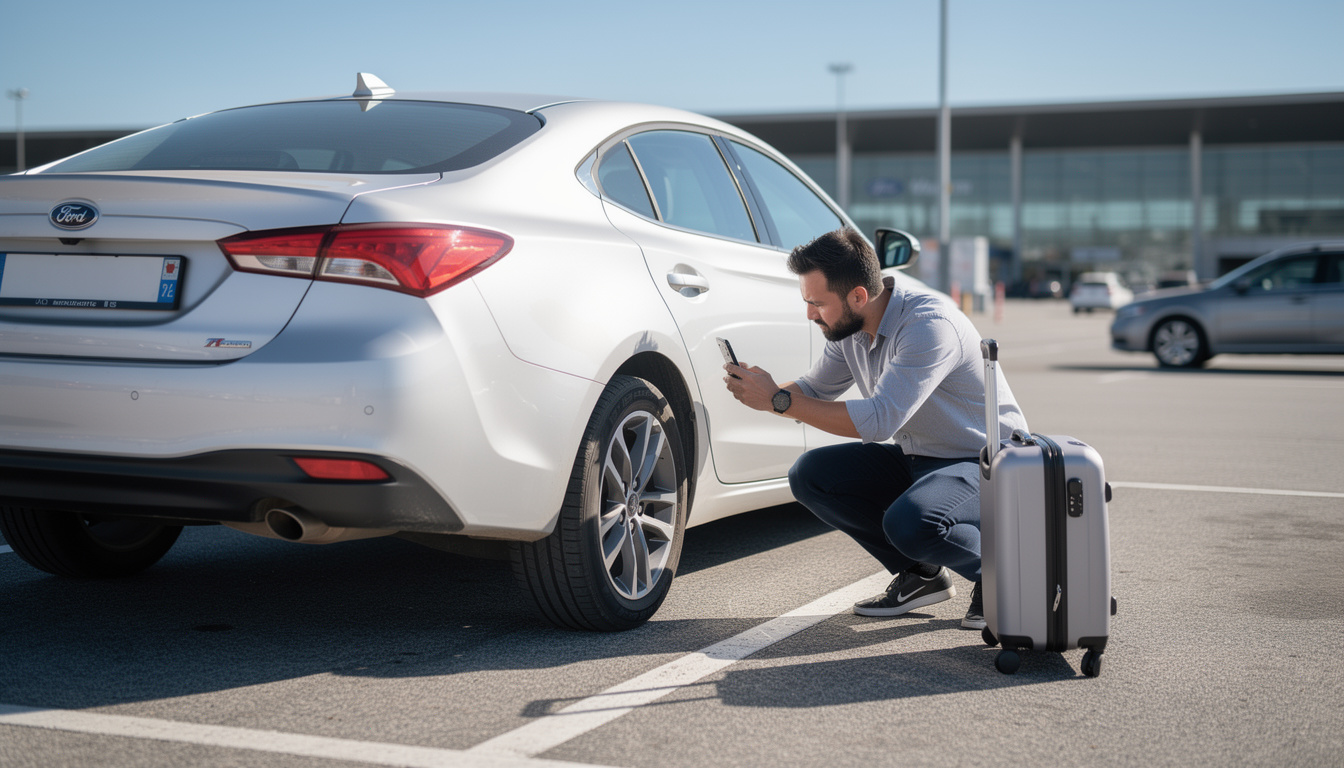
Start outside. Walk a full circle around the car and look for scratches, dents, cracked lights, and curb rash on the wheels. Take photos in good light—especially the bumper corners. It’s not paranoia; it’s clarity. If there’s a dispute later, you’re not relying on memory.
How Maya does a 3-minute vehicle inspection that actually works
She checks tires for obvious damage and confirms the fuel type (gas vs. diesel) so she doesn’t make the classic “wrong nozzle” mistake. Then she tests headlights, brake lights, and turn signals. A burned-out bulb is a safety issue and a “pull-over” magnet in strict areas.
Inside, she sets mirrors, adjusts the seat, and tests the wipers. If the wipers smear instead of clear, that’s a visibility hazard waiting for the first rain shower. She pairs her phone (or sets the car’s navigation) while parked, not at the first stoplight.
Cabin setup that reduces distraction while driving
Distraction isn’t just texting—it’s hunting for the hazard button, figuring out how to switch to defrost, or realizing too late that the headlights are not on “auto.” Maya physically points to key controls once: lights, wipers, hazards, parking brake, defrost, and the fuel door release. That tiny routine pays off when something unexpected happens.
And yes, she checks the seat belt for a clean latch and smooth retraction. If the belt doesn’t pull or buckle properly, ask for another vehicle—no debate. The insight here is straightforward: the calm you create before moving is borrowed time you’ll cash in when the road gets messy.
Rental Car Insurance Safety Tips: Coverage, Claims, and What to Document
People treat insurance like paperwork, but it’s also safety planning. When drivers don’t know what’s covered, they hesitate after a minor crash, make bad decisions under stress, or skip calling for help because they fear costs. Maya keeps it simple: know your coverage before you drive, and know what to do if something happens.
Rental counters can be intense. The agent lists options fast, and travelers feel pressured. Instead of guessing, Maya uses a quick checklist: Does her personal auto policy cover rentals? Does her credit card provide collision coverage, and is it primary or secondary? What exclusions apply (international rentals, certain vehicle classes, gravel roads, off-roading)? Those details matter more than the marketing names.
Understanding the common rental coverage types (without the jargon headache)
Collision coverage deals with damage to the rental vehicle. Liability covers damage or injury to others. Personal accident and personal effects coverage often overlap with health or homeowner policies. The “best” choice depends on your situation, but the safety win is clarity: if you know you’re covered, you’ll focus on staying calm and making good calls.
A documentation routine that protects you and speeds up claims
If there’s an incident, Maya prioritizes people first: check for injuries, move to a safe spot if possible, and call local emergency services when needed. Then she documents: photos of vehicles, plates, road layout, and any relevant signage (like odd speed limits changes). She also screenshots the exact rental agreement number and the location.
Here’s a practical table Maya keeps in her notes app—because in the moment, nobody remembers what to capture:
| What to capture | Why it matters | Quick tip |
|---|---|---|
| 📸 All sides of both vehicles | Shows impact points and severity | Include wide shots and close-ups |
| 🪪 Driver info + plates | Needed for reports and claims | Photograph IDs if allowed locally |
| 🗺️ Road layout and signs | Context (lanes, yield, speed limits) | Capture the nearest street sign too |
| 🕒 Time + weather | Supports road conditions explanation | Screenshot a weather app |
| 📞 Rental company instructions | Ensures you follow the contract | Save the hotline in contacts |
The key insight: insurance isn’t just about money—it’s about having a plan when adrenaline hits. Next up, that plan meets real-world streets.
Speed Limits and Road Conditions: Safe Driving Habits in Unfamiliar Places
Unfamiliar roads are where “normal driving” breaks down. Maya jokes that every city has its own driving dialect: some places merge like a zipper, others merge like a game of chicken. Your job in a rental car is to decode the local rhythm without getting pulled into it.
Speed limits are the obvious baseline, but safe speed depends on visibility, traffic flow, and road conditions. A posted 55 mph on a windy coastal road might be technically legal and still a bad idea in fog. Likewise, a city street posted at 25 mph can feel chaotic if pedestrians step out between parked cars.
Reading road conditions like a local (even when you’re not one)
Maya watches for “tells”: reflective paint quality, the amount of shoulder space, drainage after rain, and whether potholes are patched or ignored. In some regions, a sudden change in pavement color means a metal bridge deck—slick when wet. In mountain areas, shade can hide ice long after the sunny sections look fine.
She also respects “non-obvious hazards”: wind gusts near open fields, sand drifting onto desert highways, or farm equipment entering from hidden driveways. If you’re in a place with roundabouts and you’re not used to them, slow down early and commit to a lane choice. Last-second lane changes are where rentals get scraped.
Practical safety tips for managing speed without becoming a traffic obstacle
Maya uses a simple rule: drive at a speed where you can stop within what you can see. If that means you’re slower than the flow, she stays in the right lane, leaves extra following distance, and lets aggressive drivers go. It’s not about winning; it’s about arriving.
Night driving deserves special caution. Headlight patterns differ across vehicles, and rentals sometimes have dimmer bulbs or misaligned beams. If you notice limited visibility, reduce speed and increase spacing. The insight to carry forward: posted limits are numbers; safe speed is a decision you make every minute.
Once you’ve set a sensible pace, the next layer is strategy—how you position yourself around other drivers.
Defensive Driving Safety Tips for Rental Cars: Space, Scanning, and Predictability
Defensive driving isn’t about being timid. It’s about being hard to crash into. In a rental, that matters more because you’re learning the car’s braking feel and steering response in real time. Maya’s mindset: “Assume someone else is distracted, and build room for their mistake.”
The biggest difference between confident and safe driving is how you manage space. Tailgating is common in some areas, but you can still keep a buffer in front of you. That front buffer is your escape hatch—if the car ahead stops suddenly, you don’t need superhero reflexes.
The “space cushion” method that works in cities and highways
Maya keeps extra following distance, especially in rain or heavy traffic. She avoids driving beside large trucks for long periods and passes with purpose. If she can’t see a truck’s mirrors, she assumes the truck can’t see her. That’s not fear—it’s physics.
At intersections, she watches front wheels of cross traffic. Wheels reveal motion before the body of the car moves. It’s a small trick, but it buys time. When turning left across traffic, she avoids “rushing the gap” just because someone honks.
A simple checklist of defensive habits (easy to remember)
- 👀 Scan 12–15 seconds ahead, not just the bumper in front.
- 🧠 Expect sudden stops near tourist spots, schools, and bus lanes.
- ↔️ Avoid lingering in blind spots; either fall back or pass.
- 🛑 Brake early and smoothly to signal your intentions.
- 📵 Keep phone handling out of the equation—set navigation before driving.
- 🔔 Use signals earlier than you think you need; predictability is safety.
Maya also makes parking lots a priority zone. Most rental dings happen at low speed: tight garages, confusing arrows, and people walking while staring at their phones. She goes slower than feels necessary and uses the backup camera, but never trusts it alone—mirrors and shoulder checks still matter.
The insight here is blunt but useful: defensive driving is just proactive kindness to your future self. Next, let’s talk about what you keep in the car in case the day goes sideways.
Emergency Kit and Breakdown Safety Tips: What to Carry and What to Do
An emergency kit doesn’t have to be a giant box of gear. With a rental car, you’re limited, and you might not want to buy a trunk full of supplies. Still, a few items—and a few decisions made in advance—can turn a stressful breakdown into a manageable inconvenience.
Maya’s philosophy is “comfort plus communication.” If you can stay visible, stay warm (or cool), and contact help, you’re already ahead of most roadside problems. She also checks what the rental already includes: spare tire or inflator, jack, lug wrench, and whether there’s roadside assistance through the rental company or her credit card benefits.
What Maya actually carries (lightweight but effective)
She brings a phone cable, a small power bank, a flashlight, and a reflective vest if she’s traveling in regions where it’s common. Water and a snack matter more than people admit, especially if you’re stuck waiting for a tow in heat or cold.
If she’s driving through rural areas, she downloads offline maps. Losing signal is normal outside cities, and it’s a safety issue if you can’t describe your location. She also keeps the rental agreement info and the roadside number saved as a favorite contact.
What to do if you break down (and what not to do)
If the car has an issue, the first goal is getting out of active traffic. She pulls to a safe shoulder or parking area, turns on hazards, and keeps the seat belt on until the car is fully stopped. If it’s dangerous to stay inside (like smoke or a fuel smell), she exits and moves well away from the roadway, ideally behind a barrier.
She avoids accepting “help” from random passersby that involves getting into their vehicle. Instead, she calls the official roadside line or local services. If a warning light appears, she doesn’t ignore it for another hour “to reach the hotel.” That’s how small problems become big ones.
The final insight: your best emergency gear is a calm plan and the habit of acting early.
What are the first safety tips I should follow right after picking up a rental car?
Do a quick vehicle inspection (photos, lights, tire condition), set mirrors and seat position, confirm how to use wipers/defrost/hazards, and pair navigation while parked. Also check the seat belt latch and make sure you know where the fuel door release is.
Do I really need extra insurance when driving a rental car?
It depends on your personal auto policy, credit card benefits, and where you’re renting. The key is clarity: know whether collision and liability are covered, what exclusions apply, and what steps the rental company requires after an incident. Uncertainty is what causes bad decisions under stress.
How should I adjust my driving for unfamiliar road conditions?
Follow speed limits, but choose a safe speed based on visibility, weather, surface quality, and traffic flow. Increase following distance, slow earlier for curves and intersections, and treat rain, fog, gravel, and night driving as reasons to add extra margin.
What is defensive driving in practical terms when I’m traveling?
It means scanning ahead, keeping a space cushion, avoiding blind spots, signaling early, and staying predictable. You’re actively creating time and room to respond to other drivers’ mistakes—especially in tourist areas where sudden stops and last-second turns are common.
What should an emergency kit look like for a rental car trip?
Keep it simple: phone charger and power bank, flashlight, water, a small snack, and offline maps. Also save the rental roadside number and agreement details. The goal is communication, visibility, and comfort while you wait for help.