En bref
- 🚗 The U.S. car rental market is back in growth mode, but it’s entering a steadier, more mature phase—less chaos, more optimization.
- 📈 Expect the future to be driven by smarter fleet strategy, not just adding more cars: better utilization, better pricing, better channels.
- 🛫 Airports still matter a lot, but off-airport and “local mobility” use cases are expanding—weekends, temporary replacements, and longer stays.
- 📱 The best customer experience is increasingly “no counter, no drama”: app check-in, keyless access, faster returns, clearer fees.
- ⚡ Electric vehicles are moving from hype to “right car, right city”: EVs where charging and demand are real, not everywhere at once.
- 🤝 Ride-sharing isn’t just a rival; it’s also becoming a distribution partner (yes, your Uber could be a rental).
- 🤖 Autonomous cars are still more pilot than mainstream, but they’re already reshaping planning: logistics, delivery-to-you, and fleet ops.
- 🌱 Sustainability is shifting from marketing fluff to procurement standards, reporting, and measurable operational changes (even car washes).
Car rentals used to be simple: land at an airport, wait in line, sign a stack of papers, and hope the “mid-size” wasn’t secretly a tiny hatchback. Now the whole thing is getting rewired. The U.S. market rebounded hard after the pandemic shock and reached around $65B+ in revenue by 2025, and the vibe going into 2026 is less “recovery adrenaline” and more “adulting”: steady demand, tighter fleets, and a lot of pressure to run smarter. The big brands still dominate the mental real estate, but the day-to-day battle is happening in apps, pricing algorithms, and partnerships that would’ve sounded weird five years ago—like booking a rental through a ride-sharing platform or renting an EV with a built-in mini training course so customers don’t panic at the charging screen.
And the stakes are bigger than a vacation upgrade. Rentals sit at the center of mobility in a country built for road trips, and that makes them a kind of quiet infrastructure: tourism, business travel, insurance replacement, even corporate fleet management. Today’s trends are about frictionless pickup, data-driven fleet decisions, and sustainability that’s measurable, not performative. If you want to understand the future of car rental, you have to look at where the money is made, where the costs bite, and which “alternatives” are becoming partners instead of enemies.
The Future of Car Rental Market in the U.S.: Size, Segments, and What’s Actually Growing
Let’s ground this in reality: the U.S. car rental industry has stabilized after the rollercoaster years. By 2025, domestic revenue sat around $65.3 billion, and forecasts point to a gradual climb toward roughly $72–73 billion by 2030. That’s not explosive tech-style growth; it’s the kind of mature-market expansion that rewards operators who obsess over the boring stuff—utilization, residual values, and operational discipline.
To make the “future” conversation useful, it helps to stop thinking of rentals as only airport counters. The revenue mix is broader: leisure is the biggest chunk, business travel is back to being meaningful again, and long-duration leasing/contract hire has become a hefty pillar that smooths out seasonality. This matters because a company that wins airport leisure demand might still have a shaky year if corporate and long-term contracts aren’t healthy.
Where the money comes from: the segment mix that shapes strategy
Leisure trips remain the core engine, roughly in the low-40% share range. That’s families flying to Orlando, couples doing wine country, and “I need a SUV for a national park weekend” travelers. Business rentals are around a quarter of revenue, and the rebound of corporate travel after the pandemic dip changed fleet planning again—more premium models, more consistent weekday demand, and higher expectations for speed and service.
Then there’s the part people forget: long-term leasing and contract hire sit at about a quarter of revenue. That’s not a tourist story; it’s a fleet management story. Think: a construction firm needing vehicles for a six-month project, or a company that doesn’t want to own cars but needs predictable access. It’s “rental” as an operational utility, and it’s a big reason the category doesn’t behave like a pure travel play.
| 📊 2025 U.S. car rental revenue segment | 💵 Approx. revenue | 🧩 Share | 🔎 Why it matters for the future |
|---|---|---|---|
| 🏖️ Leisure car rental | $27.8B | ~43% | Seasonal spikes + price sensitivity push smarter dynamic pricing and better channel mix. |
| 💼 Business car rental | $16.3B | ~25% | Higher service expectations drive app-first, loyalty, and premium fleet availability. |
| 📅 Long-term leasing contracts | $15.9B | ~24% | Stabilizes cash flow; supports investments in technology and fleet optimization. |
| 🕒 Car-sharing services | $1.3B | ~2% | Small today, but it’s a testing ground for frictionless UX and urban mobility behavior. |
| 🧾 Other ancillary services | $3.9B | ~6% | High-margin add-ons become crucial when base rates get competitive. |
A quick geography reality check: where demand concentrates
Demand clusters where people actually travel and where cars are necessary. States like California and Florida together represent a huge chunk of revenue, with other heavy hitters like Illinois and Texas close behind. The pattern is consistent: big airports, convention traffic, tourism density, and cities where public transit doesn’t fully cover visitor needs.
Here’s an example that’s basically a cliché but still true: a family landing in Los Angeles might happily use ride-sharing for dinners in Santa Monica, then still rent a car to do a multi-stop loop—beaches, theme parks, a day trip, and luggage everywhere. That split behavior is exactly why the future isn’t “rentals die” or “rentals win.” It’s a more mixed mobility stack.
The key insight: the next phase of growth is less about opening 1,000 new counters and more about extracting more value per vehicle, per day, per customer—because that’s what a mature market demands.
Car Rental Trends Transforming Customer Experience: Contactless, App-First, and Actually Clearer Pricing
The fastest way to understand where technology is taking car rental is to look at what customers complain about. It’s rarely “the engine wasn’t powerful enough.” It’s lines, surprise fees, confusion at pickup, and the general feeling that the process was designed in 2007 and never updated. In the future—honestly, already in 2026—the winning play is removing friction so the rental feels closer to using a modern mobility app.
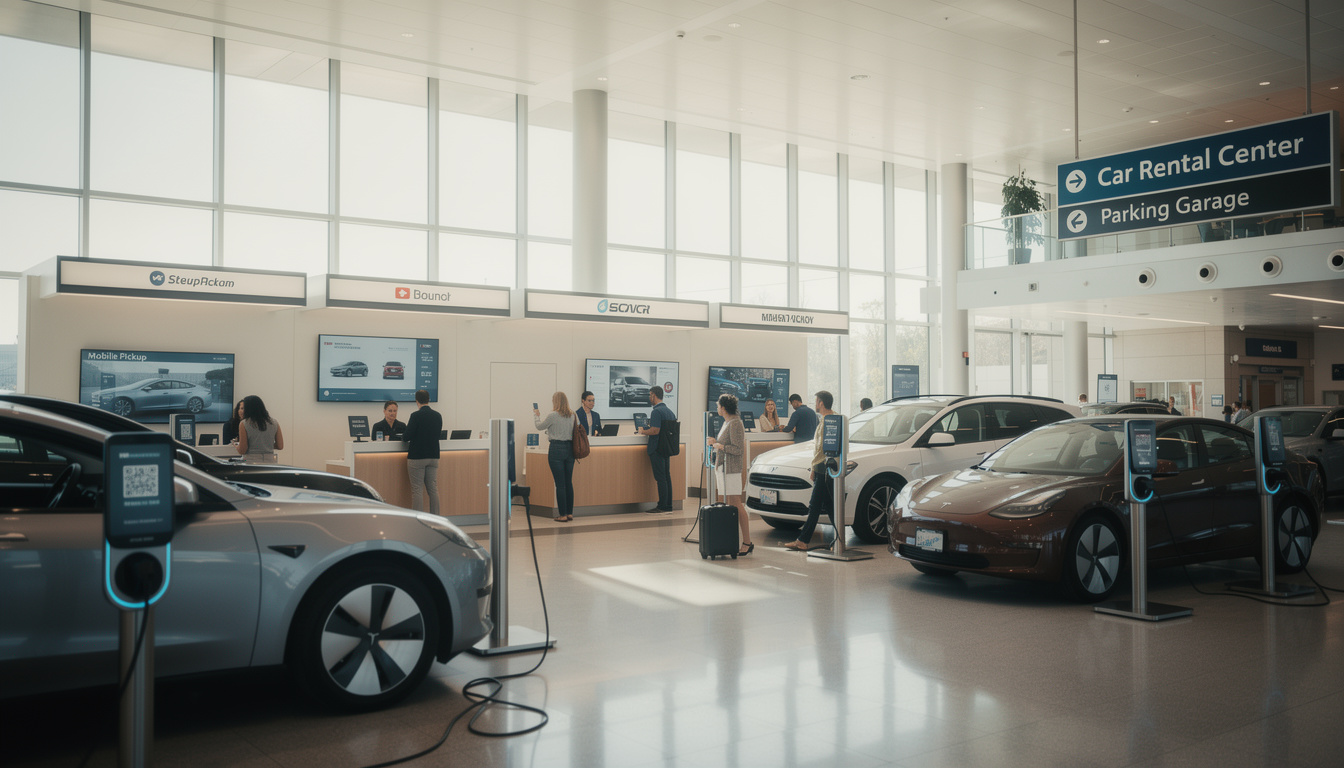
Most big operators now treat the app as the “main counter.” Reservation changes, upgrades, adding a second driver, returning early, extending a day—these are being built into mobile flows. It doesn’t just improve the customer experience; it reduces staffing pressure and speeds up throughput at high-volume locations.
The new baseline: you shouldn’t have to talk to anyone (unless you want to)
Contactless is becoming the expectation, not the perk. You book, verify identity, choose options, then either hit a kiosk for a quick check or go straight to the car if the location supports it. Keyless entry via phone is also expanding where fleets are equipped for it.
One mini case study: imagine “Maya,” a product manager flying into Denver for a conference. She lands late, it’s snowing, and the last thing she wants is a 40-minute counter line. App-first pickup means she can walk to the garage, unlock, and go. The company benefits too: faster turn times and fewer front-desk bottlenecks during peak arrivals.
Dynamic pricing gets smarter (and more personal)
Rental pricing has always moved around, but the next wave is sharper segmentation. Not just “weekend vs weekday,” but real-time pricing based on flight arrival bunching, local events, and fleet availability by vehicle class. That can sound scary, but it can also create more transparency if done right: clearer explanations for why rates changed, and better options for customers who are flexible.
There’s also a shift toward personalization: frequent renters get faster pickup paths, pre-selected preferences (SUV vs sedan, Apple CarPlay requirement, etc.), and fewer “counter negotiations.” The more a company knows a customer’s patterns, the more it can propose something that feels helpful instead of pushy—like suggesting an EV only in cities where charging is easy.
Ancillaries: the part nobody loves, but everyone buys
Add-ons like insurance waivers, toll packages, GPS (less common now), child seats, and prepaid fuel are a major piece of profit. In a mature market, these extras can determine whether a location hits its targets. The future here is less about aggressive upselling and more about packaging and clarity—because regulators and consumer expectations are tightening around fee transparency.
If a brand can present options like “city tolls included” or “worry-free damage coverage” in plain language, customers feel less tricked. That alone can lift repeat usage, which is the cheapest growth there is.
That convenience race sets up the next big theme: if the app is the new counter, then fleet decisions (EVs, hybrids, advanced safety features) become part of the product experience, not just a procurement line item.
Electric Vehicles in Car Rental: The Real-World Playbook (Not Just Headlines)
Electric vehicles are one of the loudest trends in the future of mobility, but rental fleets have learned the hard way that “ordering EVs” and “making EV rentals profitable and smooth” are two different sports. The smarter strategy now is targeted deployment: put EVs where demand, charging infrastructure, and customer readiness intersect.
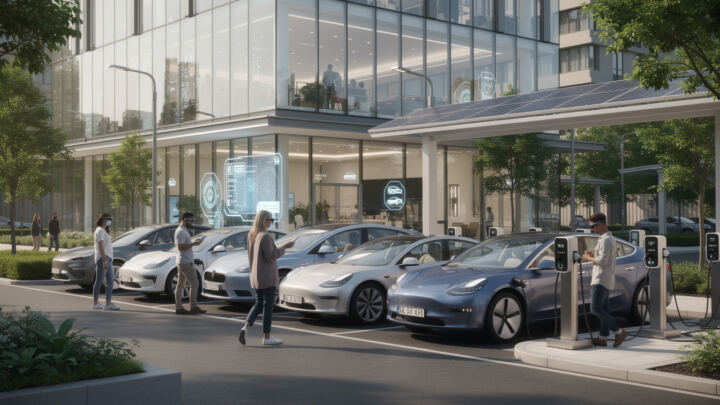
In practice, that means EV rentals are strongest in markets where people already drive electric and charging is dense—think major metros and certain airport corridors. Corporate travel policies also matter. Plenty of companies are tracking travel emissions and encouraging lower-carbon choices, so rentals can become a tactical lever: “book an EV when you can” turns into measurable reporting for corporate sustainability goals.
EV customer experience isn’t optional—it’s the product
Here’s what rental companies discovered: many customers want to try an EV, but they don’t want to feel dumb. So the best programs treat education as part of onboarding. Short videos before pickup, quick tips at the lot, and in-app guidance on nearby fast charging remove anxiety. Even small details matter—EVs are quieter, acceleration feels different, and first-time renters can think something’s wrong when it’s actually normal.
A concrete example: a renter landing in Atlanta for three days might happily take an EV if the hotel has chargers and the route is predictable (office, dinner, airport). But a family heading into rural areas with uncertain charging will usually prefer a gas SUV. The future isn’t “EV for everyone”; it’s “EV when it fits.”
Depreciation and residual value: the uncomfortable EV math
Rental economics are obsessed with depreciation, because fleets cycle quickly. EV values can move fast, and when resale prices slide, it hits the fleet P&L immediately. That’s why many operators keep EV programs region-specific rather than going nationwide overnight. A measured rollout protects profitability while infrastructure catches up.
It also pushes companies to get more sophisticated about remarketing used vehicles: direct-to-consumer sales channels, better reconditioning, and more data-driven timing on when to sell. In a world where residual values can swing, the “sell decision” becomes as strategic as the “buy decision.”
Sustainability goes beyond tailpipes: water, facilities, and procurement standards
Sustainability isn’t just about what’s in the driveway; it’s also about what happens in the service lane. A basic but surprisingly big issue is washing cars. Professional car washes can use dozens of gallons per vehicle, and in water-stressed areas that’s becoming a reputational and operational problem.
Operators are experimenting with water reclaim systems and newer cleaning approaches like steam-based methods that dramatically reduce water use while improving sanitation. This is the kind of change customers don’t always see—but corporate travel buyers and city regulators absolutely notice.
The key insight: the EV transition is becoming more realistic, more local, and more integrated into service design, which is exactly how lasting change usually happens.
Once EVs reshape fleets, the next question becomes: what happens when cars get even more automated—first through connected features, later through autonomous cars?
Autonomous Cars and Connected Fleet Technology: What Changes First (It’s Not Sci‑Fi)
When people hear autonomous cars, they imagine robotaxis everywhere. The reality is more incremental, and for car rental that’s actually good news. The first changes aren’t “no steering wheels.” They’re connected fleet tools that cut costs, reduce disputes, and make operations faster.
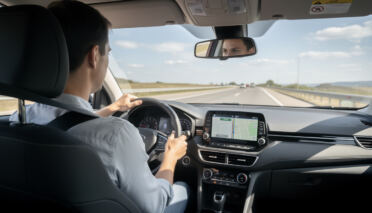
Connected cars—telematics, remote diagnostics, digital keys—are already changing how fleets are managed. If a vehicle throws a warning code, the company can flag it before it becomes a roadside breakdown. If a car is returned with low fuel or an issue, it can be logged automatically. That improves safety and reduces the classic “he said, she said” that frustrates customers.
Fleet ops in the future: fewer clipboards, more automated truth
A lot of rental friction comes from inspection and verification. Photos at pickup and return, automated mileage capture, and standardized damage documentation reduce disputes. It’s not glamorous, but it’s a huge driver of trust and repeat usage.
Picture “Jordan,” who rents weekly for consulting work. If every return triggers a surprise damage claim email, he’ll switch brands fast. If the process is transparent—photos, timestamps, clear resolution—he sticks. That’s customer experience through operations, not marketing.
Autonomy as logistics: delivery-to-you, self-repositioning, and geofenced pilots
The rental industry’s most interesting autonomous angle is logistics. If vehicles can be delivered to customers in defined areas—or reposition themselves between airports and city branches—the cost structure changes. Even limited autonomy in controlled environments (think geofenced districts, campuses, resorts) can reduce labor needs for shuttling and repositioning.
Through the late 2020s, expect more pilot programs than full rollouts. But pilots still matter because they force companies to build capabilities: data governance, safety protocols, partnerships with AV tech providers, and insurance frameworks. That groundwork is what separates “we watched the trend” from “we can actually operate this.”
Cybersecurity and data privacy become frontline issues
As vehicles and apps collect more data, privacy stops being a legal footnote. Customers connect phones to infotainment, save addresses, and sync contacts. The future requires strict processes for data wiping between renters and clear disclosures. One breach can torch brand trust faster than a thousand ads can rebuild it.
The key insight: autonomy will arrive in layers, but connected fleet technology is already rewriting daily operations—and it’s doing it in ways customers directly feel.
All that tech and fleet innovation still sits inside a tough business model, so next up is the part that decides who survives: cost structure, financing, and how companies react to pressure from ride-sharing.
Ride-Sharing, Partnerships, and the New Mobility Ecosystem: Frenemies Are the New Normal
Ride-sharing didn’t kill car rental. It shaved off certain use cases and forced rentals to evolve. In dense urban trips, it’s often easier to tap an app than to rent a vehicle, park it, and pay fees. But for multi-day travel, luggage-heavy itineraries, and road trips, renting still wins on practicality and cost control.
The more interesting story is how the boundary is blurring. Rental brands have increasingly partnered with ride-hailing platforms, turning a threat into a customer acquisition channel. The consumer story is simple: “I usually use ride-share, but this weekend I need a car.” The platform becomes the storefront.
Your next ride-share might be… a rental
There are programs where ride-hail drivers rent vehicles rather than using their own. That keeps vehicles utilized and creates a different kind of demand stream—less seasonal, more mileage-intensive, and operationally distinct (maintenance schedules, insurance structures, rapid turnaround). It’s not a side hustle; it’s a strategic utilization lever.
Here’s why this matters for the future: a rental company that can balance airport leisure demand with driver rentals and corporate contracts can smooth out volatility. In a cyclical business, smoothing is power.
The capital-intensive reality: why utilization is everything
This industry runs on expensive assets. Depreciation alone is roughly 28% of revenue on average, and “other operating costs” (maintenance, insurance, concession fees, admin) can be over half. Wages are a surprisingly small share, because revenue per employee is extremely high in a capital-driven model.
That cost structure is why companies obsess over getting cars out on rent. A vehicle sitting idle isn’t just “not earning”; it’s still depreciating. During the post-pandemic surge, tight fleets and strong pricing temporarily drove profitability to unusual highs. In the normalized environment, margins are more like high single digits—healthy, but not forgiving.
What smart operators do differently: a practical checklist
- 🧠 Use data to right-size fleets: avoid oversupply that triggers price wars and tanks utilization.
- 🛫 Defend airport channels while growing off-airport: airports bring volume, off-airport brings resilience (insurance replacement, local weekend demand).
- 🤝 Partner instead of purely competing: ride-sharing marketplaces, airlines, hotels, and corporate travel platforms become distribution engines.
- ⚡ Place electric vehicles where they’ll succeed: match EV supply to charging density and customer demand to avoid operational headaches.
- 🔐 Harden privacy and security: connected cars demand disciplined data wiping and strong cyber controls.
The key insight: the future of rentals is not a standalone category—it’s a node in a bigger mobility network, and the winners will treat partnerships and utilization like core strategy, not side projects.
Will ride-sharing replace car rental in the future?
Not overall. Ride-sharing is a strong substitute for short, urban trips, but car rental stays the better tool for multi-day travel, road trips, family luggage, and destinations with limited public transit. The bigger 2026-era trend is partnerships: rentals increasingly show up inside ride-sharing apps as a booking option.
Are electric vehicles becoming the default option for car rentals?
They’re becoming a mainstream option in the right markets, not the default everywhere. Rental companies are placing electric vehicles where charging is easy and demand is real (often major metros and certain airport corridors). Training and in-app guidance are now part of the EV customer experience to reduce first-timer anxiety.
When will autonomous cars impact car rental in a noticeable way?
Autonomous cars will likely show up first through limited pilots and logistics improvements—like easier vehicle repositioning or delivery-to-you in geofenced areas—before full self-driving rentals become common. Connected fleet technology (telematics, digital keys, automated inspections) is already making a noticeable impact today.
What are the most important technology trends in car rental right now?
App-first reservations, contactless pickup/return, keyless entry, connected-car diagnostics, and automated damage documentation are the biggest practical shifts. These tools improve customer experience, reduce disputes, and help companies run leaner operations.
How does sustainability show up beyond electric vehicles?
Sustainability increasingly includes measurable operational changes: water-saving car wash systems, facility efficiency, clearer emissions reporting for corporate travel clients, and procurement standards that make it easier to compare suppliers on apples-to-apples environmental metrics.