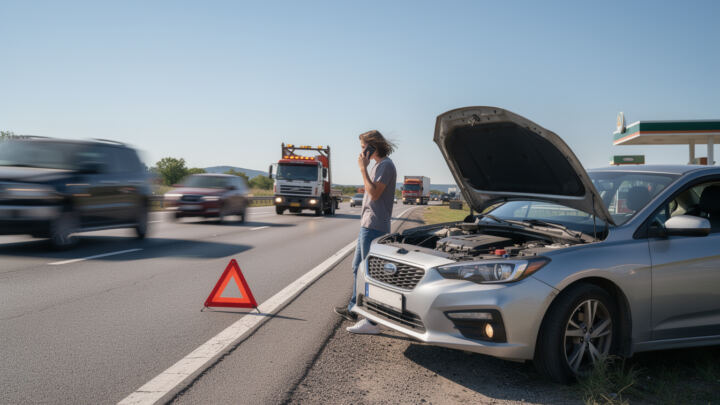
Your trip is going fine—music on, luggage in the back, maybe you’ve even nailed the perfect scenic detour—then your rented car starts coughing, flashing warning lights, or just… stops. A car breakdown in a vehicle you don’t own has a special way of turning regular stress into full-on “what do I do now?” panic. The good news: most rental brands have a playbook for this, and if you follow a few smart steps, you can protect your travel safety, avoid unnecessary charges, and get moving again faster than you think.
What matters most is the order of operations: get safe, document what’s happening, contact the rental company, and use the right roadside assistance channel (yours, theirs, or a third party). It also helps to know where responsibility usually lands—routine mechanical failures are typically on the company, while driver-caused issues can become your problem. And because coverage details can be weirdly specific (labor vs. parts, towing limits, after-hours rules), a breakdown is exactly when you want to lean on the agreement you signed, the benefits you already have, and the rental firm’s customer support. Let’s walk through it like a calm checklist, not a catastrophe.
En bref
- 🚦Get to a safe spot first: hazards on, move off traffic, prioritize emergency services if anyone is at risk.
- 📞Call the rental company and follow their protocol before you approve any car repair.
- 🛠️Use roadside assistance smartly: rental plan, credit card benefits, AAA, or pay-per-use apps.
- 🧾Keep proof: photos, dashboard warnings, receipts, names, times—this protects your insurance and reimbursement.
- 🧲Know the common trap: policies may cover labor but not parts (battery/tire), especially if they say it’s “driver error.”
- 🚚Confirm the towing service rules: who dispatches, where it can go, and who pays depending on fault.
- 🚗Ask for a replacement car fast if the vehicle isn’t safely drivable—don’t negotiate with a dying engine.
Immediate steps when your rented car breaks down: safety first, then proof
The first minute of a breakdown is about travel safety, not solving the mystery. If you feel power loss, steering getting heavy, smoke, or a loud new noise, ease off the accelerator and aim for the safest possible location—shoulder, parking lot, rest area, anywhere you can get away from moving traffic. Turn on your hazard lights immediately and keep your seatbelt on until you’re fully out of the flow of cars. If you’re on a high-speed road, staying inside with your belt on is often safer than standing next to the vehicle.
If there’s a real hazard—fire smell, visible smoke, fluid pouring out, or you’re stuck in a dangerous lane—call emergency services first. This is one of those moments where it’s better to “overreact” than to gamble. A rental contract is not worth a hospital visit.
Once you’re safe, do a quick, practical assessment. Is it a simple “quick fix” situation like a dead battery, flat tire, empty tank, or lockout? Or does it look like a genuine mechanical issue—overheating, oil warning, grinding brakes, transmission problems? You don’t need to be a mechanic; you just need to avoid making it worse. If the temperature gauge is spiking or the oil light is on, don’t keep driving “just to get to the next exit.” That’s how you turn a manageable incident into a major car repair bill.
Now switch into documentation mode. Take photos of the dashboard warnings, the car’s position (especially if it’s unsafe), and anything relevant like a flat tire or leaking fluid. Screenshot your location. Note the time. This is boring admin work—until it becomes the difference between “easy reimbursement” and “months of back-and-forth.”
Here’s a simple checklist you can keep in your head:
- 🚧 Get safe: hazards, move off traffic, assess risk.
- 📍 Pin your location: screenshot maps, mile marker if available.
- 📸 Collect evidence: warning lights, damage, tire, fluids.
- 🧍 Protect passengers: water, shade, reflective triangle if provided and safe to place.
- 📞 Contact the rental company: before spending money or authorizing repairs.
Quick example: Maya rents a compact car for a coastal road trip. Twenty minutes after leaving a gas station, she gets a battery warning and the car dies in a supermarket parking lot. Because she took a photo of the dashboard and saved the tow receipt, the rental firm later reimbursed the service call. That tiny habit—proof first—keeps your story clean.
Next up is the part that really determines how smooth your day will be: who you call, in what order, and what you say.
Calling the rental company and roadside assistance: what to say and what NOT to authorize
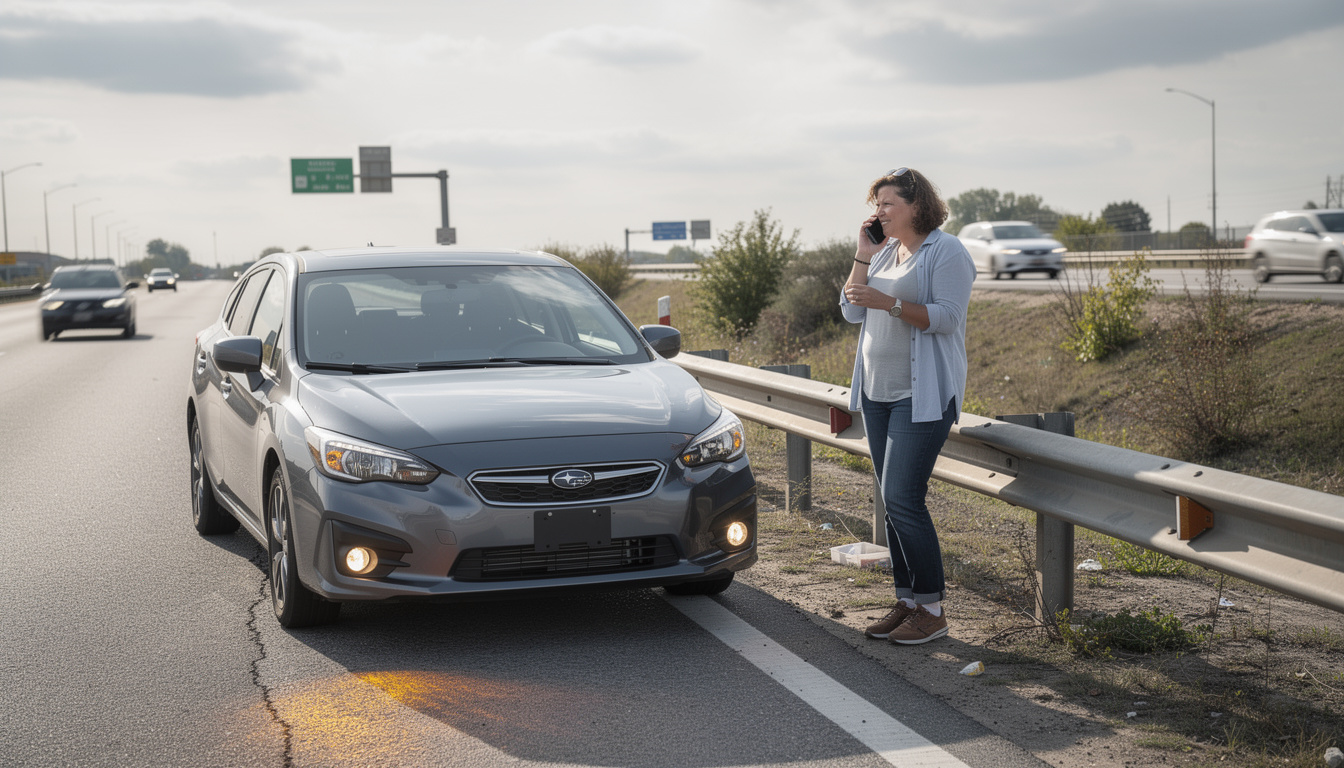
After safety, your best move is to contact the rental company directly. Not “later,” not after you’ve negotiated with a random tow operator—right away. The reason is simple: rental brands often have specific procedures for breakdowns, preferred vendors, and rules about where the vehicle can be towed or repaired. If you go rogue, you can accidentally void reimbursement even when the failure wasn’t your fault.
When you reach customer support, keep it factual and structured. Give them your contract number (or plate/VIN if asked), exact location, whether the car is drivable, and what warnings you see. Avoid guessing the cause. “Engine light flashing, loss of power, car won’t accelerate safely” is better than “I think the transmission exploded.” You’re creating a record; keep it clean.
Then ask three direct questions:
- 📞 “Can you dispatch roadside assistance or a towing service?”
- 🧾 “If I pay anything out of pocket, what receipts and details do you need for reimbursement?”
- 🚗 “If it’s not drivable, how do I get a replacement car today?”
In many breakdown scenarios, you’ll be routed to a partner roadside provider linked to your rental agreement. If you purchased the rental brand’s roadside plan, use it—just know a common catch: it may pay for the labor (the service call, the jump start, the tire change) but not necessarily the parts (battery, tire). If the company decides the situation was caused by driver error—like leaving the lights on and draining the battery—you could be billed for parts even if a technician shows up “for free.”
If you didn’t buy their plan, you might still have options. Many credit cards include breakdown benefits like jump starts, lockout help, tire changes, and fuel delivery. AAA membership can be another route. And if none of that applies, pay-per-use services (popular in the mid-2020s) can be fast and reasonably priced, especially in urban areas. The key is to tell the rental company what you’re doing and get approval when possible.
Don’t authorize a repair shop to start work just because they say, “It’ll be quick.” Get permission. Rental fleets sometimes require specific shops, warranty routes, or internal billing. If you approve work without the green light, you risk owning the invoice.
If the vehicle needs a tow, confirm the destination. Some companies want it towed to the nearest branch, others to an approved garage, and some to a manufacturer-dealer if warranty applies. Also clarify if the tow is covered. In general, when it’s a routine mechanical failure from normal wear, the company tends to handle it. If it’s linked to something you did—curb impact, wrong fuel, ignoring warning lights—then towing can become your expense.
To make this super clear, here’s a practical table you can compare against your situation:
| Situation 🔎 | Typical first call 📞 | Who usually pays? 💳 | Gotchas ⚠️ |
|---|---|---|---|
| Dead battery (unknown cause) 🔋 | Rental company / roadside | Often rental company, but may charge renter | 🧾 Labor may be covered; battery itself might not be |
| Flat tire 🛞 | Roadside provider | Depends on coverage + cause | 🧩 If tire damage is “road hazard,” reimbursement rules vary |
| Engine overheating 🌡️ | Rental company immediately | Usually rental company if not negligent | 🚫 Driving further can shift blame to you |
| Out of fuel ⛽ | Roadside or pay-per-use | Usually renter | 💰 Fuel delivery fees often apply |
| Accident-related damage 💥 | Emergency services + rental company | Insurance-dependent | 📸 Document everything; police report may be required |
Once you’ve got help on the way, the next big question is the one everyone worries about: responsibility and insurance.
Who is responsible if a rented car has a mechanical failure: liability, insurance, and the “driver error” gray zone
Responsibility is usually straightforward in theory: if the breakdown comes from ordinary wear, a manufacturing defect, or a routine mechanical fault, the rental company generally takes responsibility for the car repair. They own the fleet, they maintain it, and they benefit from keeping cars roadworthy. In practice, the messy part is that breakdowns often sit in a gray zone where “mechanical failure” and “driver contribution” can overlap.
Think of the classic arguments. Did the battery fail because it was old, or because you left a dome light on? Did a tire blow because it was worn, or because you clipped debris at speed? Did the engine overheat because the cooling system was failing, or because you ignored a warning light and kept driving for 30 minutes? These details can influence whether you pay nothing, pay partially, or get chased for a large invoice.
This is where insurance gets misunderstood. Many travelers assume their personal auto policy (or a credit card benefit) covers “everything that happens in a rental.” Often, it doesn’t cover a pure mechanical breakdown the way it covers collision damage. Insurance is typically designed for accidents, theft, and liability—not for the cost of replacing a worn alternator. That said, insurance can matter a lot if the breakdown is linked to damage (like you hit a curb and cracked a wheel) or if the disabled car leads to an incident.
Do three policy checks when you have a moment (even before your trip, ideally):
- 🧾 Rental agreement: look for wording on breakdowns, emergency help, towing limits, and what counts as “misuse.”
- 🛡️ Your personal auto policy: confirm it extends to a rented car and what coverages apply (collision, comprehensive, roadside, rental reimbursement).
- 💳 Credit card benefits: read the fine print—some offer secondary coverage, some exclude certain vehicle classes, and most require you to decline the rental company’s collision waiver to activate the benefit.
A smart add-on many drivers overlook is “rental reimbursement” on a personal policy. It’s usually marketed for when your own car is in the shop, but it can also reduce trip disruption if you end up paying for interim transport during a complicated breakdown scenario. It won’t fix everything, but it can soften the financial punch.
Here’s a real-world style scenario: Jordan rents an SUV for a business trip. On the highway, the oil pressure warning flashes. He keeps driving because the meeting is “only 15 minutes away,” and the engine fails. Even if the initial cause was a defect, continuing to drive after a severe warning can be labeled negligent. That’s how a company might deny reimbursement for towing or pursue damages. The point isn’t to scare you—it’s to show how your choices after the warning can change the outcome.
On the other hand, if the vehicle simply loses power with no warning, you pull over safely, call support, and follow their directions, the company usually swaps you into a replacement. In many cases, they’ll also adjust charges for the lost time—especially if you’re polite, organized, and you’ve got receipts to support any extra costs.
Next, let’s get very practical: quick-fix issues versus mechanic-level failures, and how to handle each without stepping on a contractual landmine.
Quick fixes vs major car repair: handling tires, batteries, fuel, and real engine trouble
Not every car breakdown is dramatic. A surprising number of rental problems are “annoying but solvable” situations: dead battery, flat tire, out of gas, or a lockout. The trick is to handle these in a way that doesn’t accidentally cost you more than necessary—or create a dispute later.
If it’s a quick fix and you can do it safely, you’re allowed to be pragmatic. For example, if you’re in a well-lit area and a roadside technician can jump the battery, that’s usually faster than waiting for a tow and a full vehicle swap. Same with fuel delivery if you misjudged a remote stretch. But you still want to loop in the rental company so there’s a record and so you know whether they want you to use their provider.
Dead battery, flat tire, empty tank: what “roadside assistance” really covers
Roadside assistance coverage often sounds more generous than it is. A lot of plans cover the service call and labor—like the jump start, the tire change, or the locksmith visit. The parts can be a different story. If a battery is actually dead-dead and needs replacement, you might pay for the battery itself and then argue reimbursement later depending on cause. With tires, you may get help mounting the spare, but replacing a damaged tire can become a charge if the company believes it’s not normal wear.
Keep every receipt, even if it’s small. Also note the provider name, time, and the work performed. Those little details help when you talk to customer support afterward.
Engine trouble, brakes, warning lights: stop negotiating, start coordinating
If you’ve got grinding brakes, overheating, oil pressure warnings, or transmission slipping, that’s no longer a “quick fix.” Call the rental company and ask for next steps. This is where they may direct you to an approved shop, or they may tell you to park it and arrange a towing service. If the car is undrivable, don’t try to limp it along to save time. That gamble can become “driver-caused damage” fast.
Ask directly about a replacement car. Many companies can switch you at a branch, meet you at a location, or at least reserve a swap so you’re not stranded. If you’re in a rural area, they might coordinate a tow to the nearest service point and then arrange onward transport. The more clearly you can describe your location and the car’s condition, the faster they can act.
Unusual situations: impound, clamping, and why delays can hurt you
Sometimes the “breakdown” is not mechanical—it’s logistical. If your rented car gets clamped or impounded due to illegal parking, the rental company is unlikely to cover recovery fees. You’ll often need a copy of the rental agreement to retrieve it, and you should act quickly. Delays can rack up storage charges, and you may still be liable for damage while the car is out of your possession. It’s frustrating, but speed matters here.
By now you’ve handled the immediate crisis. The last piece is how to protect your wallet afterward: fees, reimbursements, and getting treated fairly when your trip got derailed.
Fees, reimbursements, and getting a replacement car: how to avoid surprise charges and get back to your trip
Once the immediate chaos calms down, the money questions show up: Will you be charged for towing? Do you get a refund for the day you lost? What if you paid out of pocket for a tire? This is where a calm, organized approach beats an angry phone call every time.
Start with the rental agreement, because it’s the rulebook the agent will follow. Look for language around breakdowns, authorized repairs, towing distance limits, after-hours policies, and reimbursement procedures. If you can’t find it quickly, ask customer support to point to the relevant section. That keeps the discussion grounded in policy, not vibes.
If you had to pay for something—tow truck, battery, tire, taxi to a branch—save receipts and write a one-paragraph timeline while it’s fresh. Include: when symptoms started, where you pulled over, who you called, what they advised, and what you paid. It sounds extra, but it’s the easiest way to get reimbursed without repeating yourself five times.
When you request reimbursement or a refund adjustment, be specific. “I’d like the rental charge for the day adjusted because the vehicle was unusable from 2:10 p.m. to 7:40 p.m., and I have the service ticket and tow receipt” lands better than “This ruined my day.” Both can be true, but one is actionable.
Replacement car logistics matter too. Ask where you can swap fastest: an airport location may have more inventory than a small downtown branch. If you’re traveling during a busy period, it helps to accept a “comparable” vehicle rather than insisting on the exact same model—getting back on the road is often the bigger win.
Also watch for secondary costs that sneak in:
- 💸 Extra fuel charges if the replacement vehicle policy differs from your original
- 🧾 Toll transponder or admin fees if the car gets towed through a toll route
- 🕒 After-hours service fees from third-party providers if not pre-approved
- 📍 One-way drop fees if you end up returning the replacement in a different city
If the breakdown was clearly due to a serious defect (for example, repeated warning lights documented on day one, or a shop report stating a failing component), ask for a partial refund—not as a threat, just as a reasonable request. Many companies will offer a day’s credit or a rate adjustment when the facts are clear and you stayed within their process.
Finally, learn from it for next time: do a careful inspection before you leave the lot. Check tires, note existing damage, and make sure no warning lights are on. It won’t prevent every breakdown, but it reduces disputes when something goes wrong later.
The next time a rented car acts up, you’ll have a system: safe stop, documented facts, authorized help, and a clean paper trail. That’s how you keep a trip from unraveling.
Should I call emergency services or the rental company first?
If there’s any immediate danger—smoke, fire risk, you’re stuck in a live lane, or someone is injured—call emergency services first. If it’s non-urgent (loss of power but you’re safely parked), call the rental company next so you follow their breakdown protocol and protect your reimbursement rights.
Does roadside assistance cover everything, including parts like a new battery or tire?
Usually not. Many roadside assistance plans cover the service call and labor (jump start, tire change, fuel delivery), but parts can be extra. Keep receipts and ask the rental company what’s reimbursable—especially if the cause could be labeled driver error.
Can I take the car to any repair shop if it’s making scary noises?
Don’t authorize repairs without approval. Call the rental company and follow their instructions. They may require a specific shop, warranty process, or towing destination, and going off-script can make you responsible for the bill.
Who pays for towing service if the rented car is undrivable?
If it’s a normal mechanical failure from wear or defect, the rental company commonly covers towing or reimburses it when properly authorized. If the undrivable condition is linked to something you did (impact damage, wrong fuel, ignoring warning lights), you may be charged for towing and related costs.
What documentation should I keep to avoid disputes with insurance or the rental company?
Take photos of dashboard warnings, the car’s condition (tire, leaks, damage), and your location. Save receipts and service tickets, and note names, times, and instructions you were given. This paper trail helps with insurance claims, reimbursement requests, and any responsibility questions.