
En bref
- 💸 Rental cost isn’t just the daily rate: taxes, fees, deposits, and rental insurance often swing the real total.
- ⛽ Fuel efficiency and vehicle size matter more than most people expect—especially for city parking and long highway days.
- ✨ A luxury car rental usually means stronger car features, quieter cabins, and better tech, but also pricier add-ons and stricter rules.
- 🚗 An economy car rental is built for value and simplicity: easy to drive, easy to park, and usually the best “cost per mile.”
- 🧾 Rental duration changes everything: short trips favor economy, while longer drives can justify premium comfort and driver-assist tech.
- 🏷️ The car brand you choose can affect deposits, insurance requirements, and how “special” the whole customer experience feels.
Picking between an economy car rental and a luxury car rental sounds like a simple “budget vs. treat yourself” decision—until you’re actually booking. In 2026, pricing is more dynamic than ever, add-ons are more aggressively bundled, and the gap between “basic” and “premium” isn’t just leather seats. It’s about how the whole trip flows: parking stress, highway fatigue, tech that actually helps, and whether you end the day feeling fresh or fried.
To make this real, we’ll follow a fictional traveler, Maya, who bounces between a two-day city hop and a five-day road trip for work. On the short trip, she cares about maneuverability, fast pickup, and not getting hit with surprise fees. On the long one, she’s thinking noise levels, seat comfort, and driver-assistance that makes hours behind the wheel feel less like a chore. Same person, different priorities—so the “right” rental category shifts.
Economy vs Luxury Car Rentals: What You Actually Get for the Money
The headline difference between an economy car rental and a luxury car rental is the obvious one: rental cost. But the smarter way to look at it is value per day and value per mile. Economy cars are priced to move quickly—high availability, simple specs, predictable demand. Luxury cars price in scarcity, higher maintenance, and the premium that comes with specific trims, technology packages, and brand expectations.
Take Maya’s two-day downtown trip. An economy compact typically comes with a lower base rate, and because the segment is standardized, she can often grab something equivalent across providers. That “equivalent” part matters: you’re not paying for a particular personality, you’re paying for transportation. With luxury, you’re often paying for the vibe and the engineering—quieter cabin materials, smoother suspension tuning, better audio, and more advanced driver assistance.
Real-world pricing: deposits, fees, and why the daily rate lies
Here’s where travelers get burned: the daily rate is only the first number. Taxes, airport concession fees, “premium location” surcharges, and optional add-ons can reshape the total. Luxury rentals often require a higher security deposit, and some companies apply stricter age rules or credit card requirements. Even if the base price difference feels manageable, the checkout screen can make it feel like it jumped a whole category.
One useful habit is to compare totals using the same inputs: identical pickup time, identical return time, same pickup location, and the same add-on assumptions. Maya once saved $18/day by switching providers—then lost that savings instantly because the cheaper quote didn’t include a common local fee. The insight: compare rental cost as a total package, not as a headline.
Value isn’t only comfort: time, stress, and the “arrival factor”
Luxury isn’t only about comfort. It can also be about making an impression—client meetings, weddings, milestone birthdays. Rolling up in a respected car brand changes how the moment lands. But if the trip is mostly errands and short hops, that premium can feel wasted fast. Economy cars tend to be the “zero-drama” option: you worry less about curb rash, tight garages, and keeping the interior pristine.
If you’re asking “What am I really buying?” the answer is this: economy buys efficiency and simplicity; luxury buys refinement and a curated customer experience. The next step is understanding how the car itself changes your day.
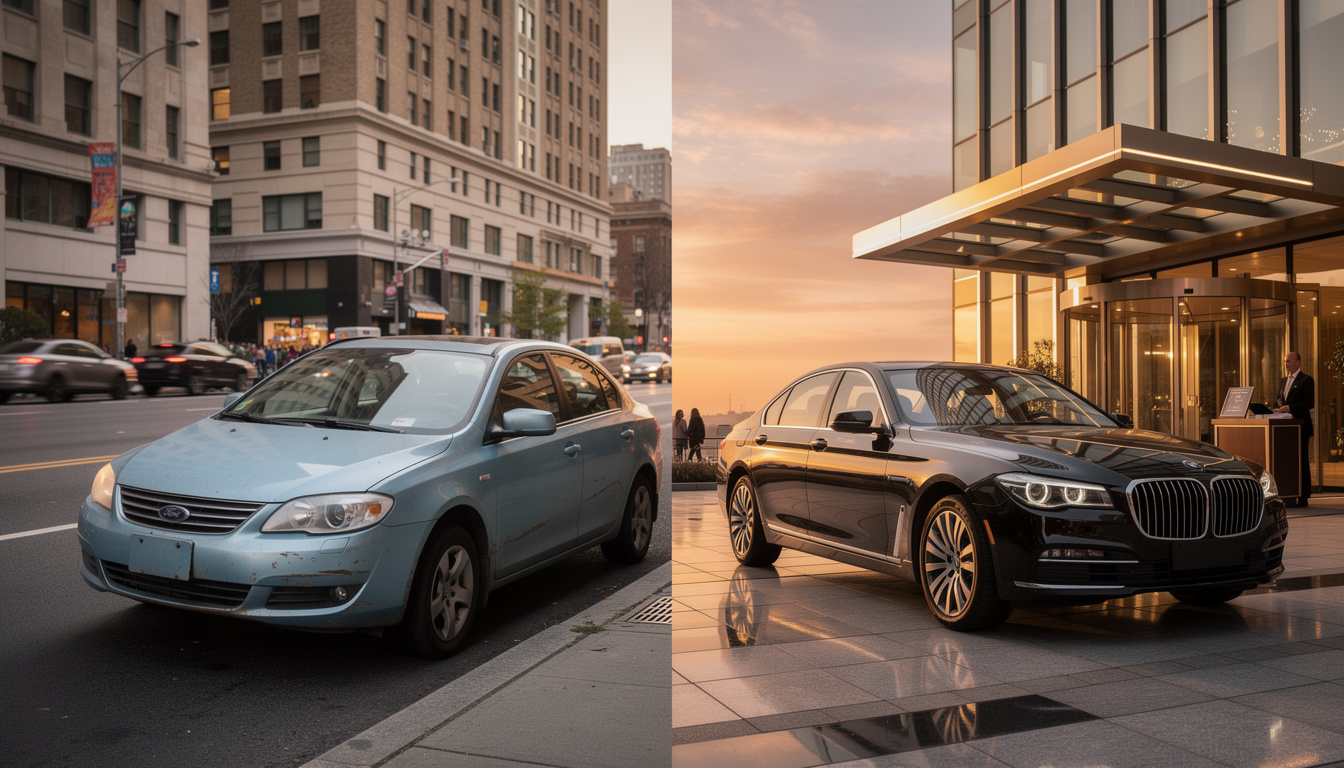
Key Differences in Car Features, Vehicle Size, and Fuel Efficiency
If money is the first filter, the car’s shape and spec sheet are the second. Vehicle size affects everything: parking, visibility, passenger comfort, and luggage strategy. Meanwhile, car features determine whether driving feels like a chore or something you kinda enjoy. In 2026, even economy models often include smartphone integration and basic safety tech, but luxury models usually push further with better sensors, nicer interfaces, and more sound insulation.
For Maya’s city trip, a smaller footprint is a superpower. A compact economy rental can slide into street parking, handle narrow lanes, and reduce anxiety in crowded garages. The trade-off is cabin space and trunk volume. If she’s hauling two big suitcases, a “cheap” compact can turn into a logistics problem.
Fuel efficiency: the quiet budget hero
Fuel efficiency is where economy cars tend to shine. A lighter car with a smaller engine (or a hybrid in some fleets) usually means fewer stops and lower fuel spending. That matters more with longer distances, but it can even matter in a city if traffic is heavy and idling is frequent.
Luxury cars can be efficient too—some newer premium models are surprisingly frugal—but the category includes bigger engines and heavier vehicles. If Maya is covering hundreds of highway miles, the difference between “good” and “great” mileage becomes real money. It also impacts trip rhythm: fewer fuel stops means less friction.
Feature sets that change the driving experience
Economy rentals typically cover the basics: A/C, power accessories, backup camera, and infotainment that works well enough. Luxury rentals lean into comfort and driver support: adaptive cruise control that’s smoother, lane centering that’s less twitchy, seats that don’t punish your back, and cabins that stay calm at speed.
One underrated luxury feature is noise reduction. It sounds small until you drive three hours on a coarse highway and step out feeling like you were sitting next to a hair dryer. Maya describes it as “arriving with energy left,” which is exactly the kind of benefit you can’t see in a listing page.
So yes, you’re paying for nicer materials. But you’re also paying for less fatigue and better driving rhythm—especially when rental duration gets longer.
To see how these features map to real decision-making, it helps to put the categories side-by-side in a way that’s actually scannable.
Rental Cost Breakdown in 2026: Insurance, Add-ons, and Hidden Multipliers
By the time you’ve picked a category, the next fight is the checkout page. This is where rental insurance, deposits, and add-ons turn a “good deal” into a “wait, what?” moment. A lot of renters still treat insurance as a checkbox, but it’s one of the biggest differences between economy and luxury bookings because premium cars can trigger higher coverage requirements and higher damage costs.
How rental insurance choices differ by vehicle class
Luxury vehicles usually come with higher repair costs—think sensors embedded in bumpers, specialized headlights, larger wheels, and more expensive paint processes. That can mean higher optional coverage prices, or stricter conditions if you decline coverage and rely on your own policy or credit card. Some premium rentals also carry limitations about where you can drive (for example, unpaved roads) and can enforce those rules more tightly.
Maya learned this the hard way on a mountain trip: the luxury SUV option looked perfect, but the fine print banned certain road types common around trailheads. She switched to a more mainstream class and avoided a potential claim dispute. The insight: insurance isn’t only about money—it’s about what the contract lets you do.
| Category | What you usually pay for 💸 | What you usually gain 🎯 | What can surprise you ⚠️ |
|---|---|---|---|
| Economy car rental | Lower base rate, lower deposit, cheaper add-ons | Great fuel efficiency, easy parking, simple driving | Smaller vehicle size, fewer premium car features |
| Luxury car rental | Higher base rate, higher deposit, pricier coverage | Comfort tech, cabin quiet, stronger performance, brand presence | Stricter rules, higher rental insurance costs, wheel/tire sensitivity |
Add-ons that matter (and the ones you can skip)
Add-ons are where rentals can quietly balloon. GPS is usually unnecessary if you have a smartphone. But an additional driver can be worth it on longer trips, because it reduces fatigue and spreads responsibility. Child seats are often expensive; if you travel frequently with kids, owning a travel-friendly seat can pay off.
In 2026, toll transponders and “convenience bundles” are common. Sometimes they’re legit helpful; sometimes they’re overpriced. Maya’s rule is simple: if an add-on doesn’t remove real stress, she skips it.
- 🧾 Do price-check rental insurance vs. your own coverage and credit card benefits.
- 🧳 Do match vehicle size to luggage and passenger count, not just to your ego.
- 📱 Skip paid GPS unless you’re traveling with limited connectivity.
- 🛣️ Be careful with prepaid fuel: it’s convenient, but only a win if you’ll return nearly empty.
- ⏱️ Watch the clock: late returns can trigger extra days depending on policy.
Once the money side is clear, you can focus on something most people underestimate: how the category changes service levels and the overall vibe from pickup to return.
Next up: the human factor—how premium and budget rentals differ in the real-world customer experience, not just on paper.
Customer Experience Differences: Pickup Lines, Service Levels, and Brand Expectations
People talk about “luxury” like it’s only a vehicle spec. In practice, customer experience can differ a lot between categories, depending on the company and location. Some brands run separate premium counters, faster handoffs, or prioritized vehicle selection. Others don’t—and you’re basically paying for the car alone. Knowing which situation you’re in can be the difference between “worth it” and “why did I do this?”
Pickup and return flow: speed is a feature
Economy renters often face the most volume. That can mean longer lines, more standardized processes, and a “next!” feeling at peak times. Luxury bookings sometimes come with shorter queues or dedicated staff, especially at major airports. The difference isn’t guaranteed, but when it’s there, it’s real value—less waiting, less paperwork stress, fewer upsell battles.
Maya’s strategy is to treat time like money. If she’s landing late and has an early meeting, a smoother pickup is worth paying for. If she’s arriving midday with flexibility, she’ll lean economy and keep the savings.
Car brand perception and the “moment” factor
Car brand matters because it shapes expectations. When you rent premium, you expect the car to be spotless, the tech to be functional, and the condition report to be accurate. That’s not snobbery—it’s risk management. A luxury car with unreported rim damage can turn into a dispute fast.
Economy rentals often feel more forgiving. Minor cosmetic wear is common, and the psychological burden is lower. You still document the car (always), but you’re less likely to feel like you’re babysitting it.
When premium is actually the calmer choice
It sounds backward, but there are cases where luxury reduces stress. Long highway stretches? Better seats and quieter cabins reduce fatigue. Unfamiliar routes? Higher-end driver assistance can make lane changes, adaptive cruise, and night driving easier. Special events? Showing up in a premium car can remove social anxiety if the setting is formal.
That said, luxury can increase stress if you’re parking on tight streets, navigating rough roads, or worrying about every curb. That’s why the best choice isn’t “always economy” or “always luxury.” It’s matching the class to the trip’s friction points.
The final piece is learning to choose quickly and confidently based on trip type—because nobody wants to overthink a rental for three nights in a city they’ll never revisit.
Choosing the Right Rental Duration Strategy: City Weekends vs Long Road Trips
Rental duration is the lever that changes the math. For short bookings, the difference between economy and luxury can feel like a big percentage jump with limited payoff—especially if you’re barely in the car. For longer trips, comfort and technology can become productivity tools, not indulgences.
Weekend city breaks: optimize for size and simplicity
If your plan is museums, restaurants, and quick hops, an economy car rental usually wins. Smaller vehicle size makes parking simpler, and great fuel efficiency keeps costs predictable. Most of the time you’re paying for convenience, not the “drive.”
Maya’s rule for city weekends is blunt: if she’ll spend more time looking for parking than driving, she goes small and basic. She’d rather spend the difference on food, shows, or a nicer hotel.
Multi-day road trips: comfort becomes a budget item
On road trips, luxury features have time to pay you back. Better seats reduce stiffness, higher-grade audio and cabin isolation reduce mental fatigue, and advanced cruise systems can make long distances feel less draining. If you’re arriving to work meetings, that matters.
This is also where “mid-tier” can be the sweet spot: not full luxury, but not barebones either. Still, when the trip includes a milestone dinner or client-facing event, a luxury car rental can cover both transport and presentation.
A quick decision checklist you can actually use
- 🧮 Calculate true rental cost for the whole trip (fees + fuel + insurance), not the daily rate.
- 📍 Map your driving: city tightness vs highway miles; it dictates ideal vehicle size and comfort needs.
- 🛡️ Decide your rental insurance plan before booking to avoid panic at the counter.
- 🎛️ Pick 3 must-have car features (like adaptive cruise, trunk space, or Apple CarPlay) and ignore the rest.
- 🧑🤝🧑 Match the car to the “people reality” (kids, coworkers, luggage), not the fantasy version of the trip.
Once you’re thinking this way, the choice stops being emotional and starts being practical—while still leaving room for a little fun when the moment calls for it.
Is an economy car rental always the cheapest option overall?
Usually, but not always. The lowest daily rate can lose if the car is too small (forcing an upgrade later), if fuel costs spike due to poor real-world mileage, or if fees differ by location. Always compare total rental cost including taxes, fees, fuel, and any rental insurance you plan to add.
Do luxury car rentals include better insurance by default?
Not automatically. A luxury car rental may have higher required deposits and higher-priced coverage options because repairs can be expensive. Read the agreement, check what your personal policy or credit card covers, and confirm whether wheels/tires/glass are included if that matters for your trip.
What car features matter most when choosing between economy and luxury?
For economy, prioritize fuel efficiency, easy parking, and basic connectivity. For luxury, the biggest quality-of-life upgrades are seat comfort, cabin quiet, driver assistance (adaptive cruise/lane support), and better lighting for night driving. Pick features that reduce stress for your specific route.
How does rental duration change the best choice?
Short rentals often favor economy because the comfort premium has less time to pay you back. With longer rental duration—especially road trips—premium comfort and driver-assist tech can reduce fatigue and make the trip feel easier, which can justify the higher rental cost.