
Understanding how rental car companies handle fuel costs is crucial before you hit the road. With various fuel policies in place, knowing your options can save you from unexpected costs and make your journey smoother. In 2026, as travel resumes its hustle, renters must be savvy about how fuel charges apply to their agreements. Whether it’s the wildly popular full-to-full option or the straightforward prepaid fuel route that entices, every choice comes with its perks and drawbacks. By arming yourself with knowledge, you can navigate the rental landscape with ease and confidence.
Let’s dive deeper into the mechanics of rental car fuel policies and how to choose the right one for your journey. Each policy carries unique nuances that align with different travel needs, budgets, and preferences. If you think choosing a vehicle is the tough part, wait until you see what’s in store for fuel management!
- 🚗 Full-to-Full: The Save-Friendly Choice
- 💰 Prepaid Fuel: A Convenient Gamble
- 🛑 Pay-As-You-Go: Flexibility Comes at a Cost
- ⚠️ Hidden Charges & Fees: Always a Threat
Understanding Common Fuel Policies in Car Rentals
When it comes to car rentals, there are generally three widely recognized fuel policies: full-to-full, prepaid fuel, and pay-as-you-go. Each has its own set of advantages and inconveniences, making them suitable for different types of travelers. Making an informed choice requires a clear understanding of how these options work and which aligns best with your travel itinerary.
Full-to-Full: The Save-Friendly Choice
The full-to-full policy is frequently hailed as the most economical choice for many renters. You receive your rented vehicle with a full fuel tank and are expected to return it in the same condition. If you don’t fill it up before handing the keys back, expect to be charged a premium rate by the rental company.
To maximize your savings, it’s wise to fill the tank at a nearby gas station just before returning the car. This way, you’re likely to pay a rate far less than what the rental company would charge you. Remember to keep the receipt from the station as evidence of refueling. It also never hurts to double-check the fuel gauge when picking the car up; if it’s not showing full, bring it to the rental company’s attention immediately!
Many travelers prefer this option not just for the potential savings but also for the transparency it provides. You pay only for what you use, and you have freedom over where to refill. 💵 But be sure to plan your return accordingly—at least one gas station nearby should be on your radar.
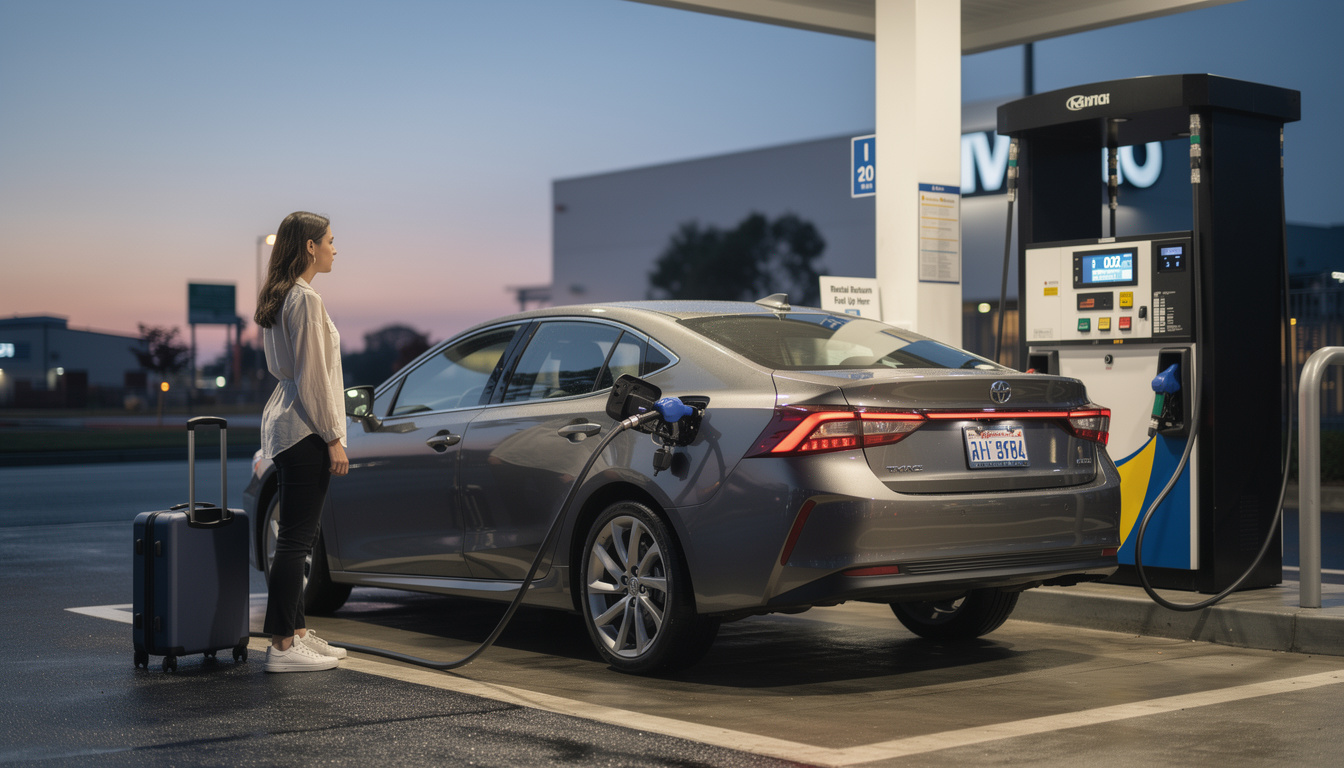
Prepaid Fuel: A Convenient Gamble
The prepaid fuel option lets you pay for a full tank of gas at the outset of your rental. This means you don’t have to stop at a gas station before returning the vehicle, which can be a boon for those on tight schedules or with early flight departures. ✈️ The convenience factor is hard to beat, but be cautious: if you return the vehicle with fuel left in the tank, you won’t receive a refund.
This option is particularly useful for long trips where you anticipate using a lot of fuel. Rental companies occasionally offer advantageous rates for prepaid options, so it’s worth considering if you plan on running through the entire tank. However, for short trips, this policy might lead to you wasting money as you may not use the entire tank you’ve paid for, making it less cost-effective compared to the full-to-full option.
Pay-As-You-Go: Flexibility Comes at a Cost
The pay-as-you-go policy may sound appealing because of its flexibility, but renters need to be aware that it generally comes with the highest costs. With this approach, you’ll be charged for the amount of fuel used during your rental period, often at a price that exceeds standard gas station rates. 🚦 This arrangement might suit travelers who don’t want to deal with refueling, but it’s typically not the optimal choice if you’re on a budget.
In some cases, rental companies may also impose additional administrative fees, making this option even pricier. Renters keen on flexibility should really consider if they’ll actually save any money compared to the fixed options like full-to-full. Depending on your itinerary, you could find yourself paying significantly more than anticipated.
Uncovering Hidden Charges Related to Fuel Policies
Rental car agreements can often include hidden charges related to fuel costs. If you fail to read the fine print carefully, you might encounter unpleasant surprises that inflate your rental expenses. For instance, with the full-to-full policy, if you don’t return the car with a full tank, expect to be charged a significantly inflated rate for the fill-up, along with a potential service fee.
With prepaid fuel options, any unused fuel means your money is wasted—there are usually no refunds. Understanding these possibilities helps you prepare and avoid pitfalls. Always read your rental agreement carefully and consult customer service for clarity.
| Fuel Policy | Cost Factor | Convenience Level | Refund Policy |
|---|---|---|---|
| Full-to-Full | Pay for only what you use | Moderate – requires refueling | Refunds based on fuel usage |
| Prepaid Fuel | Full tank paid in advance | High – no need to stop | No refund for unused fuel |
| Pay-As-You-Go | Higher per-litre rates | High – no refueling | Limited – potential hidden fees |