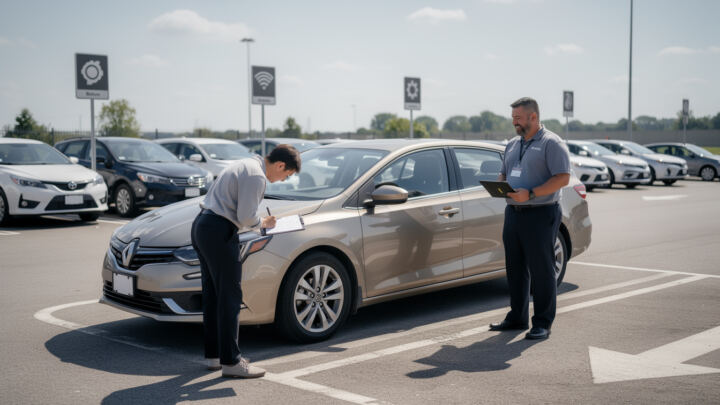
En bref
- ⏰ Aim for an early return time to avoid rush-hour drama and surprise late fees.
- 🧾 Treat your final receipt like a boarding pass: don’t leave without it (or a timestamped digital copy).
- 🔍 Do a quick but serious inspection with photos, especially wheels, glass, and the roof.
- ⛽ Know your fuel policy before you hit the station—“full-to-full” and “prepay” are totally different games.
- 📍 Confirm the exact drop-off location and after-hours rules so you don’t return to a locked gate.
- 🧼 Basic cleanliness (no trash, no spills) helps prevent annoying “cleaning fee” add-ons.
- 📞 If anything happens, do damage reporting fast and use customer service channels that create a written record.
Airports make rental car returns feel like a speedrun: you’re watching the clock, juggling bags, and hoping the shuttle actually shows up. Meanwhile, the rental company is thinking about something else entirely—whether the vehicle comes back on time, in the right place, with the right fuel level, and in the same condition it left. That gap in priorities is where most extra charges are born. The good news: returning a rental car is one of those life tasks that gets dramatically easier when you treat it like a simple checklist, not a vague “drop the keys and run” moment.
In this guide, we’ll follow a fictional traveler, Maya, who rents cars often for work and has learned the hard way that small details matter: the timestamp on a receipt, the exact wording of a rental agreement, and the difference between normal wear and something that triggers damage reporting. We’ll get into timing strategies, photo habits that actually help, and how to talk to customer service so you don’t end up in an email loop for three weeks. Think of it as practical, slightly paranoid (in a good way), and designed to keep your trip’s final minutes calm.
Best practices for rental car return time: timing, traffic, and late fees
Let’s start with the most underrated factor: return time. A lot of people plan the return like this: “My flight is at 2:00, so I’ll return the car at 12:30.” Then they meet airport traffic, miss a turn into the rental complex, wait behind three buses, and suddenly they’re handing keys over at 1:05 while sweating through their shirt. That’s how late fees happen, and they can be surprisingly expensive depending on the company’s grace period and billing increments.
Maya’s rule is simple: treat the car return like a mini-appointment that deserves buffer. If it’s an airport location, she aims to arrive 60–90 minutes before she truly needs to. At a downtown branch, 30–45 minutes can be enough, but only if you’ve checked the branch hours and whether they get slammed at lunch. Why so cautious? Because some counters process returns in waves, and if you need an agent for a final walk-around, the line can be longer than you’d expect.
How billing blocks work (and why “just 10 minutes late” can cost real money)
Many companies bill by 24-hour blocks, not calendar days. That means if your rental agreement says the car is due at 10:00 a.m., returning at 10:45 might push you into another billing unit, or trigger a partial-day charge. Some brands have grace periods, but don’t count on it unless it’s stated in your rental agreement—and even then, policies can vary by location. Maya once returned a car 22 minutes late in a busy European city and got charged an extra half-day; the branch manager pointed to the contract terms and that was that.
One practical move: set a calendar alert for “last safe departure time” rather than the due time. In other words, if it takes 25 minutes to reach the return lane from your hotel, your alert should fire 60 minutes before the due time, not 25. It sounds obvious, but it’s a huge mindset shift.
After-hours drop-offs: convenient, but document everything
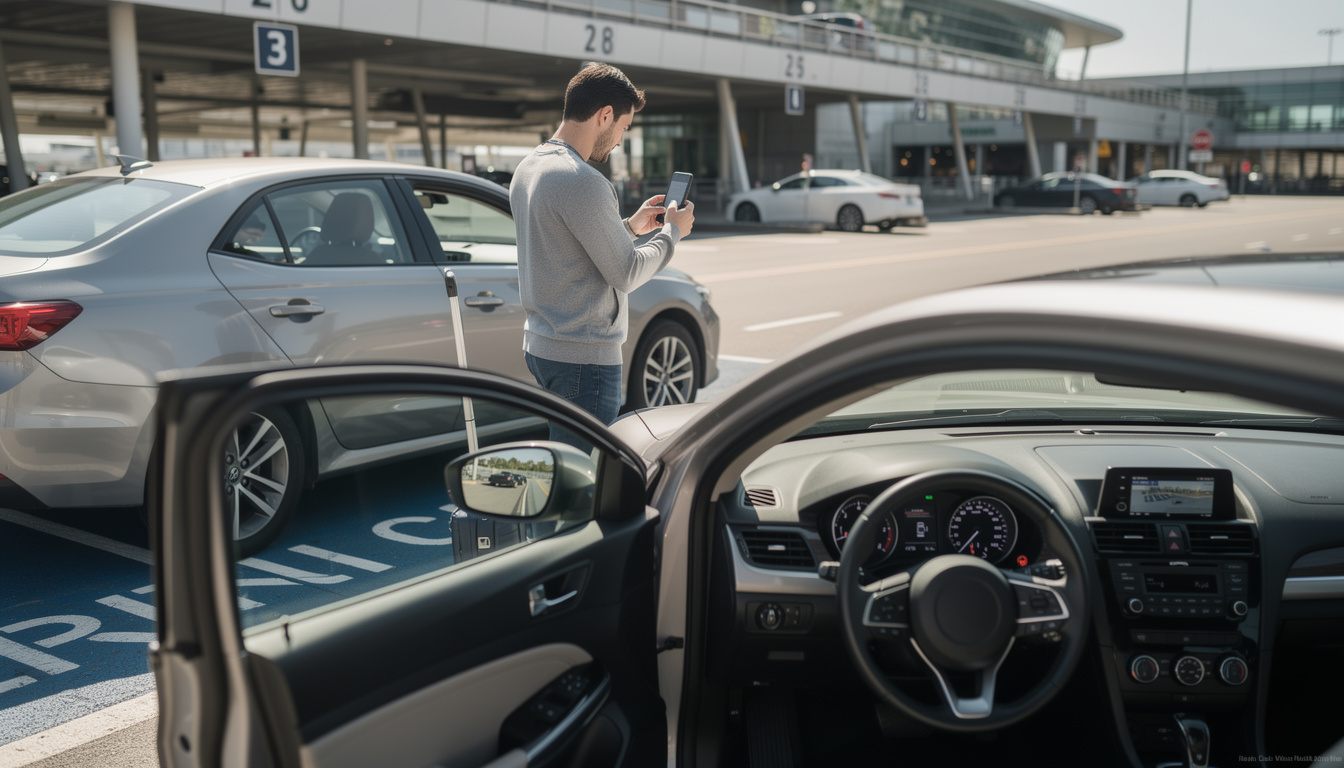
After-hours returns are a lifesaver, but they come with a catch: you may not have an employee there to confirm condition, mileage, or fuel level. If the branch lets you park and drop keys, take extra steps. Maya does a quick walkaround video that includes the dashboard (mileage and fuel gauge), the parking spot, and the key-drop box. Then she takes still photos of the front, rear, both sides, wheels, and the roof. That’s not overkill—it’s insurance against “we found this later” claims.
Next up, timing is only half the story. The other half is what you’re returning—so let’s talk about the vehicle’s condition and how to avoid disputes.
Rental car inspection best practices: photos, walkarounds, and damage reporting
A proper inspection isn’t about being dramatic—it’s about being specific. Most people glance at the car, see nothing obvious, and call it a day. But the stuff that becomes a dispute is often subtle: a rim scrape, a windshield chip, a long scratch that only appears at a certain angle, or a dent on the roof from something falling in a parking garage. Those are exactly the kinds of issues that pop up after you’ve flown home and forgotten the details.
Maya’s method is quick and consistent. She does it the same way every time so she doesn’t miss a side. First, she walks around clockwise, taking photos at each corner and mid-panel. Second, she gets close-ups of all four wheels and tires (rims are a common charge area). Third, she checks glass: windshield, side windows, rear window, and mirrors. Finally, she looks at the interior: seats, trunk, floor mats, and dashboard. A two-minute routine can save you from a two-week back-and-forth with customer service.
What “normal wear” can look like, and why it still gets argued
Rental firms often distinguish normal wear from chargeable damage, but the gray zone is real. A tiny scuff may be acceptable, while a deeper scratch might not be. The problem is you usually learn the company’s threshold after the fact. So your best defense is solid documentation and immediate damage reporting if you notice something questionable before you return the keys.
Here’s a real-world style scenario: Maya spots a small chip low on the windshield when the sun hits it. She doesn’t know if it was there at pickup. Instead of hoping it disappears, she calls customer service from the return lane, asks them to note the file, and emails photos to the address they provide. She also gets the agent’s name. If it becomes a claim later, she can point to the timestamped message.
How to talk to the return agent so the record helps you
If there’s an agent on-site, be polite but clear: “Can we do a quick walkaround together?” If they’re rushed, ask a narrower question: “Can you confirm you see no new damage on the exterior?” That phrasing matters because it encourages them to state it aloud and (ideally) mark it in their system.
Also: don’t let “You’re good” be the end of it. Ask for a printed or emailed receipt that shows return date/time and that the car was checked in. That small piece of paper is your best friend if a surprise charge appears.
Condition is one pillar. The other big one is fuel, where confusion is basically a business model. Let’s make that part boring—in a good way.
Fuel policy and cleanliness: avoiding refueling charges and cleaning fees
Fuel policy is where people get hit with the most predictable, preventable charges. The tricky part is that “fuel policy” sounds like one thing, but it’s actually several different systems, and they lead to totally different best practices. You can do everything right at the pump and still get charged if your policy requires a different approach.
The most common arrangement is full-to-full: you pick up with a full tank and return with a full tank. Easy in theory, annoying in practice if the nearest station is overpriced or you’re running late. Maya’s workaround is to identify a reputable station within 3–5 miles of the return location the day before. She saves it on her map. That way she isn’t panic-searching “gas near me” while missing exits.
Prepay fuel vs. full-to-full: the “cheap convenience” trap
Prepay can be convenient if you know you’ll return close to empty, but it can be a bad deal if you bring it back half full. Some contracts charge you for a full tank upfront and you don’t get refunds for unused fuel. That’s not a scam—it’s just the math of convenience. The best practice is to choose prepay only when you’re confident you’ll use almost all of it.
Another variation is “return as-is,” where they charge you for what you use at a set price per unit. That can be fine if the price is reasonable, but check the number. If the per-gallon/liter rate is higher than nearby stations, you’re paying for speed. If your schedule is tight, that trade-off might be worth it; just decide consciously.
Cleanliness: small effort, fewer arguments
Cleanliness doesn’t mean detailing the car like you’re entering a concours show. It means: remove trash, wipe obvious spills, shake out sand, and don’t leave food in the trunk. Maya keeps a small bag in the passenger footwell so wrappers don’t end up everywhere. Before return, she spends three minutes doing a “trash sweep” and checks cupholders and door pockets.
Why bother? Because “excessive cleaning” fees often rely on judgment calls. A car that looks cared for is less likely to get flagged. Plus, if you do get challenged, your return photos will match a tidy interior, which helps your credibility.
A quick reference table for common return scenarios
| Scenario | Best move | What it protects you from |
|---|---|---|
| ⛽ Full-to-full policy | Refuel within a few miles and keep the receipt 🧾 | Refueling charges and disputes about gauge level |
| 🕒 Tight return time | Consider paying for fuel option or refuel the night before | Missing the due time and getting late fees ⏰ |
| 🧼 Messy interior (kids, beach, pets) | Do a quick vacuum/wipe and photo the interior 📸 | Cleaning fees tied to subjective standards |
| 🌙 After-hours drop-off | Video + photos + dashboard shot, then save files | Claims made after you’re gone (damage/fuel/time) |
With fuel and tidiness handled, the last big lever is paperwork and communication—because the cleanest return in the world won’t help if the record is messy.
Rental agreement and receipt workflow: paperwork habits that prevent surprise charges
Your rental agreement is basically the rulebook, and the final receipt is the scoreboard. If either one is missing, you’re arguing from memory, and memory loses. Maya keeps a simple system: she screenshots or downloads the agreement at pickup, then creates a folder on her phone titled with the rental dates. Into that folder go pickup photos, return photos, fuel receipts, and the final return receipt email.
Why is this worth doing? Because disputes rarely happen the same day. They pop up later as an automated charge: refueling, cleaning, toll admin fees, a “damage recovery” line item. When that happens, customer service will ask for documentation, and “I’m pretty sure it was full” isn’t documentation.
What to check on the return receipt before you leave the lot
If you’re getting an on-site receipt, read it for five seconds. Look for: return date/time, the correct location, fuel status (full/level), and any damage notes. If it says “fuel: not full” and you know you just filled up, that’s your moment to fix it—while you’re still there and the pump receipt is in your pocket.
If it’s emailed, wait for it. Don’t assume it’ll arrive. Maya stands to the side, opens her email, refreshes, and confirms the message landed. If it doesn’t, she asks the agent to resend or print. It feels picky, but it’s way less annoying than chasing it later.
How to handle “we’ll email you later” returns
Some returns don’t generate an instant receipt, especially after-hours. In that case, create your own paper trail. Take a photo of the car in the return lane with signage visible, plus the dashboard photo showing mileage and fuel. Then take a photo of the key drop (without showing any sensitive codes if posted). If you used a fuel station, keep that receipt too. These items together tell a coherent story: where, when, and in what condition you returned it.
If a charge appears later, you can respond quickly with specifics rather than frustration. That’s exactly what customer service teams need to resolve things fast.
When to escalate, and how to stay organized
If you spot an incorrect charge, start with customer service chat or email so you have a written thread. Include: agreement number, return time, photos, and the receipt. Keep it calm and factual. If the first agent can’t help, ask for escalation to a supervisor or claims department, depending on the issue (fuel vs. damage). Maya’s experience is that concise evidence beats emotional arguments every time.
Now that the paperwork is tight, there’s one more angle people forget: who’s allowed to return the car, and what happens when plans change mid-trip.
Location logistics and authorized drivers: smooth returns even when plans change
Returns go sideways when reality doesn’t match the booking: you’re dropping at a different location, a coworker is returning it for you, or your schedule shifts and you need to extend. These are normal travel problems, but they’re also the moments where rental agreements get strict. If you want a smooth return, plan for “what if” scenarios before you’re standing in a parking structure with 2% battery.
Maya once had a meeting run late and asked her colleague to return the car. The colleague wasn’t listed as an authorized driver. The branch staff wouldn’t fully process the return under that person’s name and told them to leave the car in the lane. It eventually got sorted, but the delay triggered confusion about timing and nearly caused additional charges. Lesson learned: authorized driver rules aren’t just for driving; they can affect handoff and accountability at return.
Changing drop-off location: call before you drive
One-way returns can be allowed, but they can also come with big fees or require approval. If you simply show up at a new branch and drop the car, you might end up with an unclosed contract until the vehicle is located in the system. That’s how people get billed extra days. The best practice is to call customer service, update the reservation, and get confirmation in writing (email or app). Then return only to the approved location so the contract closes cleanly.
Extensions and “I’ll be back in an hour”: don’t gamble with late fees
If you’re running late, don’t just assume a grace period will cover you. Extend through the app or call customer service. Make sure the extension is confirmed, not “requested.” Also check whether extending changes rates. Sometimes an extra day at the original rate is fine; other times the pricing jumps because the promo no longer applies. That’s still better than an unplanned late return plus penalty pricing.
A practical checklist you can reuse every trip
- 📍 Confirm the exact return location and hours (especially holidays).
- ⏰ Set a buffer for return time to avoid late fees.
- ⛽ Re-check the fuel policy and plan your last fill-up accordingly.
- 🔍 Do a final inspection: wheels, glass, roof, interior, trunk.
- 📸 Take timestamped photos/video, especially for after-hours.
- 🧼 Do a quick cleanliness sweep: trash, spills, sand.
- 🧾 Get the final receipt and verify key details before leaving.
- 📞 If anything is off, use customer service and document damage reporting immediately.
Once you’ve got logistics and authorization handled, the last step is making sure your most common questions have clear, non-stressful answers—especially when you’re in a hurry.
How long does it usually take to return a rental car with an agent?
If an agent is present, a typical return takes about 5–10 minutes: they verify the rental agreement details, do a quick inspection, close the contract, and issue a receipt. Add extra time at busy airport locations or during peak hours so your return time buffer is realistic.
What should I do if I returned the car full but got charged for fuel anyway?
First, find your fuel receipt and note the time and location of the fill-up. Then compare it to your return receipt (or return time photos showing the gauge). Contact customer service in writing, attach both receipts and any dashboard photo, and request a correction based on the fuel policy stated in your rental agreement.
Is after-hours key drop safe, and how do I protect myself?
It’s common and usually safe, but you should document the return yourself: photos/video of the exterior, wheels, and interior, plus a clear dashboard shot for mileage and fuel. Also capture the car parked in the return area with signage and keep your receipt if you refueled. This helps if damage reporting happens after the vehicle sits unattended.
What’s the smartest way to handle a scratch or chip I notice at return?
Do damage reporting immediately. Take close-up photos and wider shots showing where it is on the car, then notify the return agent or customer service right away so it’s timestamped in the record. Ask for a receipt or written confirmation that notes the report, which makes disputes much easier to resolve.
Can someone else return the rental car for me?
Sometimes yes, but only if that person is properly covered by the rental agreement (often as an authorized driver) and the company allows them to complete the return at that location. Call customer service before handing the car off, get confirmation, and make sure the final receipt is issued to close the contract cleanly and avoid late fees.