If you’ve ever landed in a new city and felt that instant tug-of-war between “I want to see everything” and “I don’t want to waste my vacation waiting around,” you already get why car rental can be the difference between a nice trip and a truly free one. In 2026, travelers are mixing big-ticket classics with quick nature escapes, and the winners are the places where driving is basically part of the experience: toll-road corridors to theme parks, desert loops that beg for sunrise starts, island causeways, wine-country backroads, and day trips that public transportation simply doesn’t cover well. These aren’t just popular pins on a map—they’re the top destinations where your schedule stays yours, where a spontaneous detour becomes the story you tell later, and where “let’s explore” doesn’t come with an asterisk.
To make it feel real, follow two friends—Maya and Jordan—planning a week that blends travel, food, and outdoors. They’re not trying to “do it all.” They just want options: sleeping in without missing the trailhead, swapping a crowded beach for a quiet one, or grabbing tacos at a spot that’s nowhere near a transit line. Their rule is simple: book a car that matches the city’s reality (tolls, parking, heat, hills), pick the smartest pickup location, and lock in coverage so the counter doesn’t turn into a negotiation. That mindset is what turns a regular road trip into an easy, confident adventure—and the cities below are where it pays off the most.
En bref
- 🚗 The top destinations aren’t always the most walkable—often they’re the most rewarding once you can explore beyond downtown.
- 🛣️ Cashless tolls matter in places like Florida and parts of Texas; plan for tags, plate billing, or programs that simplify it.
- 🎢 Orlando and Los Angeles are “built for drivers,” but timing (I‑4, freeways) makes or breaks your day.
- 🏜️ Las Vegas is the ultimate day-trip base; the Strip is optional, the scenery isn’t.
- 🍷 New York City is best with a car only when you’re leaving the five boroughs—Hudson Valley weekends hit different with your own wheels.
- 🎸 Austin’s best moments are scattered across neighborhoods and Hill Country; the right vehicle makes it feel effortless.
Orlando car rental essentials: theme parks, toll roads, and stress-free family driving
Orlando is one of those rare cities where driving feels like the default setting. The roads are wide, the signage is straightforward, and the entire region is stitched together by routes designed to shuttle visitors between hotels, theme parks, shopping, and beaches. For Maya and Jordan, Orlando is their “easy-mode” vacation stop: land, grab keys, drop bags, and you’re already halfway to the first roller coaster. That’s why Orlando regularly ranks among the top destinations where car rental is less a luxury and more a practical tool for tourism.
How toll roads quietly shape your itinerary
Central Florida’s convenience often runs through cashless toll corridors. Routes between the airport area, resort zones, and the coast can involve toll segments that don’t accept cash. That’s not a “gotcha” if you plan it—it’s just the cost of moving fast. The trick is to pick a toll solution that doesn’t turn into a pile of admin later. Some travelers rely on plate billing; others use programs that provide clearer invoicing and even cashback-style handling of toll charges. Either way, build it into your mental map so you’re not making last-second exits because you’re worried about a toll gantry.
Maya learned this the hard way on a previous trip: she avoided tolls to “save money,” added 35 minutes each way, and arrived at the park already tired. This time, they budget for tolls like they budget for snacks—small costs that protect the whole day.
Traffic timing: I‑4 isn’t scary, it’s predictable
Orlando traffic has patterns. The big one is I‑4, which tends to slow during morning arrivals to the parks and again after evening shows and fireworks. If your plan is flexible, shift your “big move” earlier. Grab breakfast near your hotel, leave before the crowd surge, and you’ll feel like you’ve hacked the city. If you can’t avoid peak timing, at least lean into it: queue a playlist, set expectations, and remember that a slow crawl beats standing in a rideshare line with exhausted kids.
Parking and vehicle choice: pick what fits the trip you’re actually taking
Parking is generally plentiful: multi-level garages at major entertainment zones, giant surface lots, and hotel parking that’s often bundled outside the most premium resorts. Vehicle choice is where people overthink it. In Orlando, a compact SUV is often the sweet spot: easy in garages, decent cargo for strollers and shopping bags, comfortable for day trips. For larger groups, minivans win on real-life usability—sliding doors in tight spaces and cargo layouts that don’t require luggage Tetris.
Jordan’s family rule is simple: if you have six to eight people, don’t split into two cars unless you enjoy coordination problems. One bigger vehicle keeps everyone on the same timeline, which is underrated when your day is scheduled around ride windows and dinner reservations.
Orlando’s big insight: the city rewards travelers who treat transportation as part of the plan, not an afterthought.
Miami car rental strategy: beaches, bilingual neighborhoods, and day trips that make the city bigger
Miami is a shape-shifter. One minute it’s art walls in Wynwood, the next it’s a quiet café in Little Havana, then suddenly you’re staring at sawgrass on the edge of the Everglades. That variety is exactly why car rental matters here: it turns Miami from “a beach weekend” into a flexible base for adventure. For Maya and Jordan, the goal isn’t to drive all day—it’s to have the option to escape peak crowds, try a new neighborhood for dinner, or tack on a one-day loop that feels like a bonus trip inside the same travel itinerary.
Airport pickup vs. downtown pickup: it’s about your first 48 hours
Miami is one of the smartest cities to consider delaying your pickup. If you’re spending your first couple days in a walkable zone (South Beach or parts of Brickell), you might not need a car right away. Parking can be tight, metered spaces are limited, and hotel valet lines can test your patience after a long flight. A common move is to arrive, settle in, do the beach-and-food routine on foot, then pick up a vehicle downtown when you’re ready to drive out to Key Biscayne, the Keys, or nature.
But if you’re landing late, traveling with kids, or planning an immediate day trip, grabbing the car at the airport can be smoother than juggling luggage and rideshares.
Parking reality: choose garages for overnights
South Beach parking is the classic “don’t make this harder than it needs to be” scenario. Street spots are competitive and time-limited. Overnight, garages around the main corridors are usually the calm choice. Once you accept that garages are part of the cost of doing Miami comfortably, your trip gets easier. You stop circling. You stop arguing. You just park and go eat.
Peak traffic and causeways: plan like a local for one day
Miami traffic spikes around commuter hours, and the beach causeways can feel extra sticky on sunny weekends. Build buffer time, especially if you’re catching a cruise departure or trying to hit a specific reservation. Maya and Jordan treat a Miami drive day like a mini road trip: water in the car, snacks, and a mindset that the drive is part of the story. It’s a small mental shift that keeps the mood light.
Miami’s big insight: the city is fun, but the region is the payoff—your wheels unlock it.
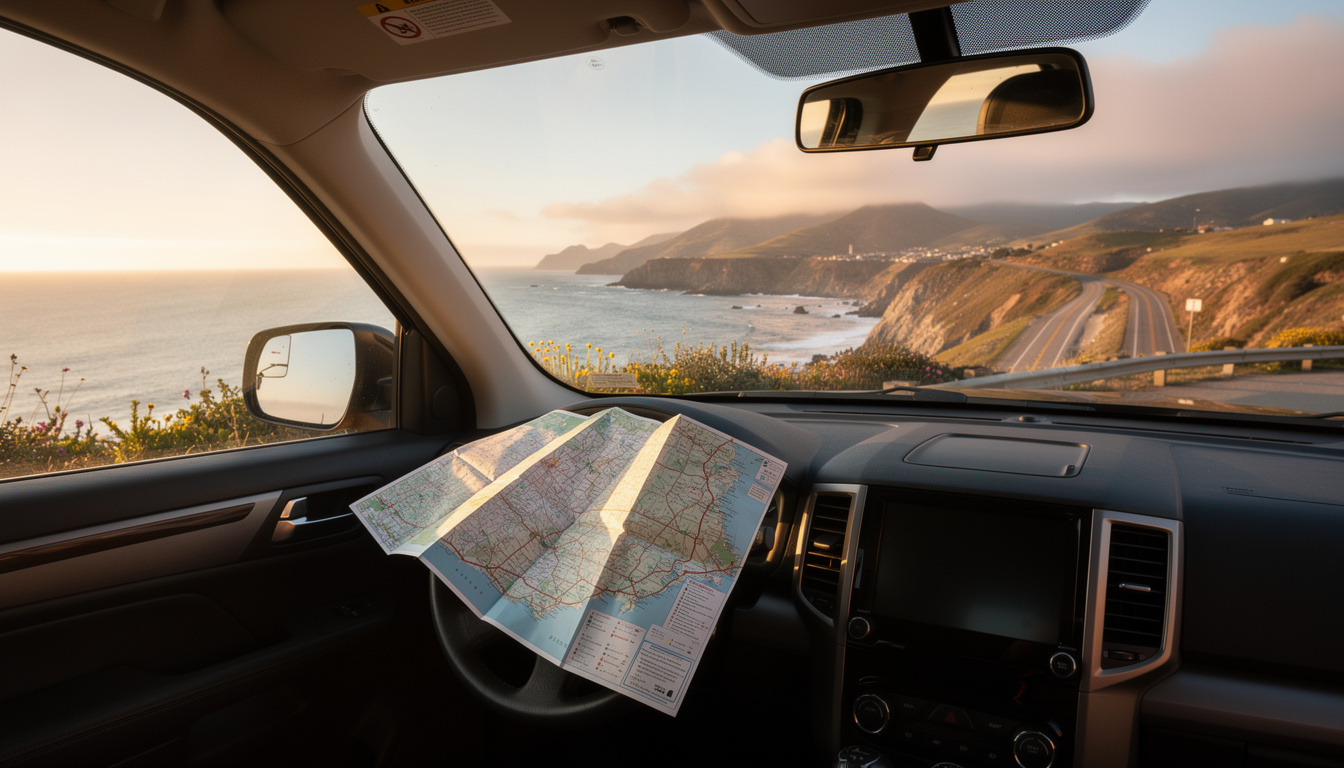
Need visual inspiration for a Miami-to-Everglades day? This kind of route planning is where a car turns “maybe” into “we actually did it.”
New York City car rental when it counts: escaping the five boroughs for real road-trip value
New York is the poster child for great public transportation. Inside Manhattan, a car can feel like self-inflicted pain. Yet New York also sits near the kind of countryside that makes you want to roll the windows down: Hudson Valley river towns, vineyards, farm stands, Catskills cabins, and beach drives toward the Jersey Shore. That’s where car rental becomes a power move—just not for the part of the trip most people assume.
The “pick up on the way out” rule
Maya and Jordan’s NYC plan is simple: enjoy the city car-free, then pick up a vehicle near the exit path—often at a major airport like JFK or sometimes via Newark if the route aims west or south. This reduces the odds of wasting an hour inching through Midtown just to reach a bridge. If the goal is a weekend loop, you want your first hour behind the wheel to feel like progress, not gridlock.
Timing beats horsepower in New York
In NYC-area driving, the best “upgrade” isn’t an engine—it’s a schedule. Avoid late-afternoon weekday departures when cross-bronx and bridge traffic turns into a slow-motion lesson in patience. Early mornings are the secret weapon, especially in summer. You’ll arrive at trailheads before the parking fills, and you’ll sit down for brunch in a river town while others are still staring at brake lights.
A two-day Hudson Valley loop that actually feels relaxing
Here’s how their weekend looks in practice: Day 1, they leave after breakfast, stop at a farm stand for fruit and cider donuts, then hike a moderate trail with river views. They check into a small inn and pick a dinner spot that’s not “the most famous on Instagram,” but the one locals like on a side street. Day 2 is flexible: a short scenic drive, a bookstore, a coffee town, and home before the Sunday return rush gets ugly.
NYC’s big insight: keep the city walkable, then use a car to explore the parts no subway reaches.
Los Angeles car rental playbook: freeways, canyon roads, and the best kind of weekend mileage
Los Angeles is a classic: huge, spread out, and packed with things that sound close until you check the map. If your idea of travel includes beaches, neighborhoods with wildly different vibes, studio tours, museums, and a sunset drive that feels like a movie scene, LA pretty much demands car rental. People sometimes try to “go car-free” and end up spending half their day waiting, transferring, or paying surge pricing. In LA, the car isn’t a splurge; it’s how the city works.
Parking and hotel fees: budget honestly from the start
One detail that surprises first-timers is hotel parking. Many properties charge nightly rates that can make you feel like the parking spot is the real luxury suite. So bake it into your budget early. Once you’ve accepted that, LA becomes simpler: choose lodging with reasonable parking, use public lots at beaches and major attractions, and read street signs carefully (street cleaning is not a myth, and tickets are not cute souvenirs).
Pick a vehicle for heat, distance, and comfort
LA day trips are where you feel the difference between “any car” and “the right car.” If you’re looping through Palm Springs and Joshua Tree, you’ll want comfortable seats, good range, and enough cargo space for water, layers, and a cooler. A hybrid or mid-size SUV often hits the balance: efficient on long stretches, stable in wind, roomy enough for gear without feeling like you’re piloting a bus in tight garages.
Case study: the desert loop that makes LA feel like three trips in one
Maya and Jordan do a 2–3 day loop: LA to Joshua Tree for a late afternoon hike, then stargazing when the sky finally goes full black. They overnight near Palm Springs, grab breakfast, and drive scenic stretches when the light is soft and the heat hasn’t peaked. It’s the kind of mini road trip that makes your camera roll look expensive, even if you kept it simple.
LA’s big insight: when you plan parking and timing like an adult, the city rewards you with freedom.
Las Vegas and Austin: two top destinations where a rental car unlocks day trips, food hunts, and pure adventure
Las Vegas and Austin look totally different on paper, but they share a key trait: the best moments often happen beyond the “main strip” of activity. Vegas is the ultimate base camp for jaw-dropping landscapes. Austin is a music-and-food hub surrounded by Hill Country routes that feel tailor-made for weekend wandering. In both places, car rental turns a standard city break into a bigger, more personal vacation—the kind where you keep saying, “Wait, we can just go?”
Las Vegas: save your miles for the views
Vegas is famously walkable in tiny segments (hotel to hotel), but the real payoff is outside the neon. Red Rock Canyon, Valley of Fire, and Hoover Dam are the kind of easy drives that feel like you’ve teleported into a different world. The trick is not to burn your energy crawling the Strip in traffic or circling for parking at every resort. Many travelers use rideshares for short hops and keep the car for daylight drives—because that’s where the adventure is.
Austin: the city is fun, the Hill Country is the flex
Austin’s charm is scattered: tacos from a truck, a swim at Barton Springs, a bookstore stop, then live music later. Add in day trips to spots like Pedernales Falls, Enchanted Rock, or the Highland Lakes, and it becomes obvious why having your own transportation matters. Weekends can get busy, so start early, park once, and walk a neighborhood rather than moving the car every 20 minutes.
Money and logistics checklist you’ll actually use
- 💸 Book early, tweak later: flexible cancellation windows let you lock a good rate and adjust if plans shift.
- 🏙️ Airport vs. downtown pickup: airports often have longer hours and bigger fleets; downtown can be cheaper if you’ll be car-free at first.
- ⛽ Fuel policy: full-to-full is common—refuel near the return point to avoid pricey service fees.
- 🧾 Tolls: cashless systems are common in Florida and parts of Texas; pick a setup with clean, transparent billing.
- 👥 Drivers and coverage: add extra drivers ahead of time and choose coverage that avoids counter upsells 😅.
Quick comparison table: where a rental car changes the trip
| 📍 Destination | 🚗 Why car rental is a must | 🅿️ Parking vibe | 🛣️ Biggest driving “gotcha” |
|---|---|---|---|
| Orlando | Theme parks + beach side quests with fast highways | Generally easy at resorts and attractions | Cashless tolls + I‑4 peaks 🎢 |
| Miami | Neighborhood hopping + Everglades/Keys day trips | Garages best for overnights 🅿️ | Causeway and rush-hour traffic 🌴 |
| New York City (for escapes) | Hudson Valley/Catskills access for real road-trip value | Skip parking in Manhattan if possible | Bridge/tunnel timing 🗽 |
| Los Angeles | Spread-out sights + desert/coast loops | Hotel parking often paid 💳 | Freeway timing + street signs 🧾 |
| Las Vegas | National-park-style day trips in every direction | Varies by property; check before booking 🎰 | Don’t waste mileage on Strip crawls 🏜️ |
| Austin | Hill Country detours, lakes, hikes, and food hunts | Weekend street parking fills fast 🎸 | Festival/football demand spikes 🚦 |
Next up, it helps to tie everything together with the practical questions travelers ask right before they click “book.”
Is it cheaper to rent a car at the airport or downtown?
It depends on your first couple of days. Airport locations usually have longer hours and more vehicle choice, which is great for late arrivals or immediate day trips. Downtown pickups can be cheaper if you’ll be car-free at first (common in Miami or NYC), then only need wheels for a road trip segment.
What documents do I need for car rental in the U.S.?
Bring your driver’s license and a credit card in the lead driver’s name. International visitors should also carry a passport, and an International Driving Permit if the license isn’t in Roman characters. Always match the booking name to the card to avoid counter delays.
How do cashless tolls work in places like Florida and Texas?
Cashless toll roads use a windshield tag or license-plate billing. You typically get charged after the trip through your rental provider’s toll program. The key is choosing a setup with transparent invoices (and ideally simplified handling) so you can just drive and enjoy the vacation.
What vehicle size should I pick for a family road trip?
Think luggage + parking, not just passengers. Compacts are easiest in tight garages, a mid-size SUV is a solid all-rounder for four people with strollers, and a minivan is the stress-free choice for 6–8 travelers because sliding doors and fold-flat cargo space make daily logistics way easier.
Can I do one-way rentals between these top destinations?
Often yes, especially on popular routes (like Los Angeles to Las Vegas). One-way fees and availability vary, so book early if your trip crosses state lines or involves different pickup/return depots.