En bref
- 🚨 Secure the scene first, then get a police report even if the collision looks minor.
- 📸 Treat damage reporting like a checklist: photos, witnesses, plates, and the rental agreement.
- 🧾 Expect layered insurance coverage: your policy, the rental company’s options, and sometimes credit card benefits.
- ⚖️ Liability can be shared; comparative-fault rules can shrink payouts and slow accident claims.
- 💬 Don’t wing it with adjusters—document every call and use customer support channels strategically.
- 🧠 Fees like “loss of use” and admin costs can sting; you need to know what your coverage actually reimburses.
If you’ve ever rented a car and felt that tiny jolt of anxiety when you pull out of the lot—new mirrors, different brakes, unfamiliar roads—you’re not imagining things. Car rental accidents have their own weird gravity. The crash itself might look like any other fender-bender, but the moment you realize there’s a rental company involved, everything turns into a layered puzzle: contracts, deadlines, waivers, multiple insurers, and a lot of confident-sounding people telling you what you “have to” do. The tricky part is that you can do the right thing for safety and still accidentally do the wrong thing for the claim process.
In 2026, the mechanics are faster—apps, instant uploads, digital claim portals—but the stakes haven’t changed. A rushed statement, missing photos, or a late notification can turn a manageable situation into months of back-and-forth. Whether you were driving the rental or got hit by someone who was, you need a calm, repeatable playbook: lock down the facts, follow the rental agreement, and line up the correct insurance coverage in the right order. Do that, and you’ll avoid most of the expensive surprises people complain about later.
What to Do Immediately After Car Rental Accidents (Safety, Evidence, and Fast Damage Reporting)
Let’s use a simple thread to keep things real: imagine Maya, visiting Los Angeles for work, picks up a midsize rental and heads to a client meeting. She’s two miles from the hotel when traffic stops short and she taps the car ahead. No one is screaming, but the bumper is bent and her stomach drops. This is the exact moment when good decisions save you money.
First: safety. If anyone might be hurt, call emergency services. Even if it feels “minor,” adrenaline lies. Move to a safe spot if the cars are drivable and it’s legal to do so. If you can’t move them, get out of traffic and stay visible.
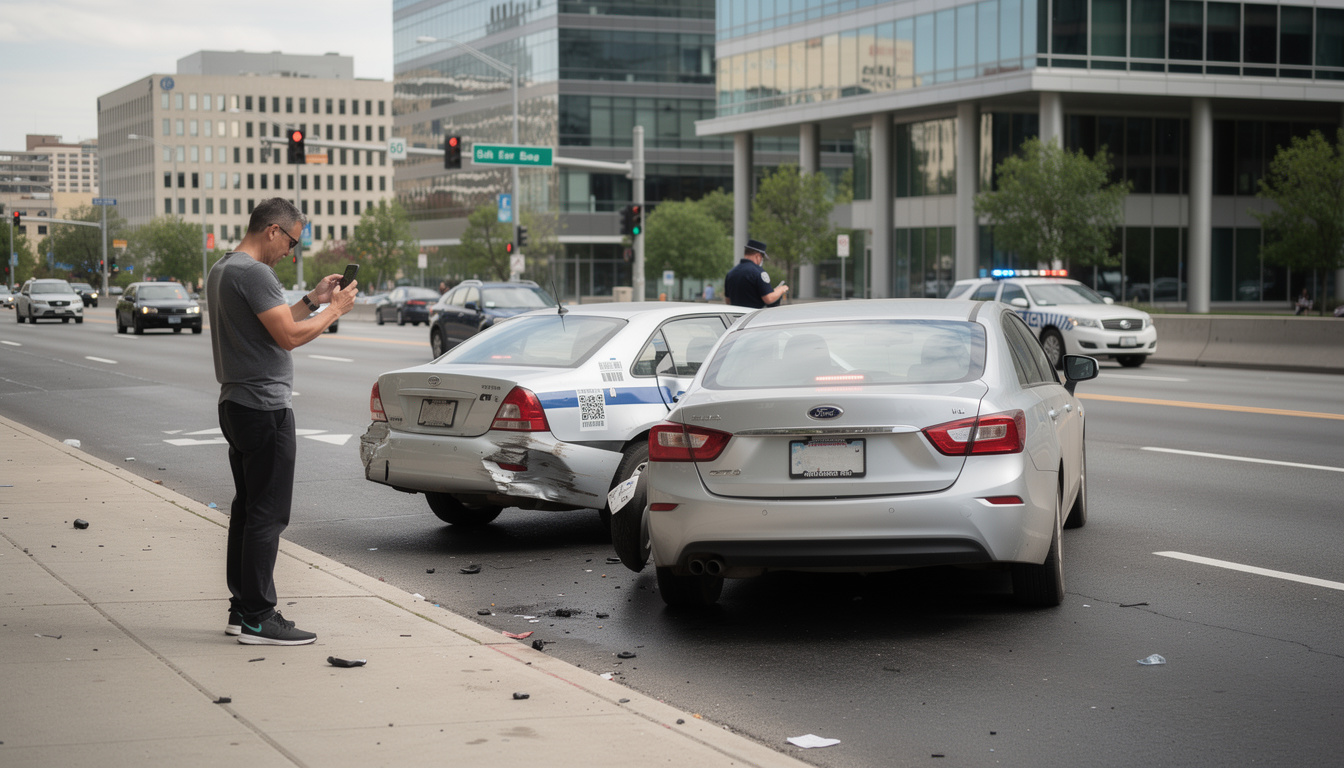
Second: get law enforcement involved and request a police report. People skip this when damage looks small, then regret it when stories change. Officers document the time, location, parties, and sometimes early fault indicators. For accident claims, that paper trail is gold.
Third: start damage reporting with your camera before anyone has time to “rethink” what happened. Take wide shots (lane positions, skid marks, traffic signs) and tight shots (all corners of both vehicles, license plates, interior airbags if deployed). If there are injuries, photograph visible bruising cautiously and respectfully—your medical records matter more, but early photos can support them.
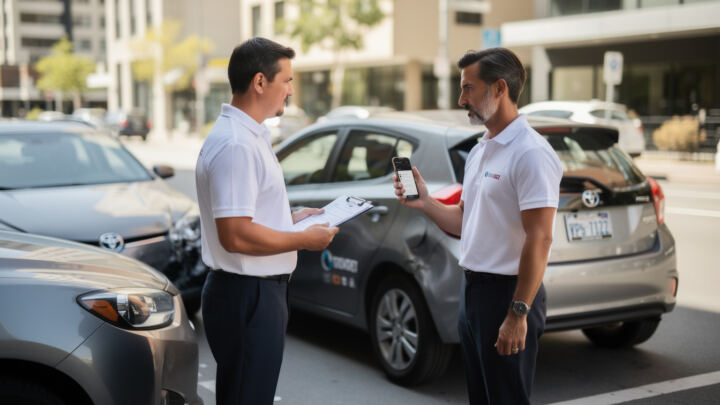
Fourth: gather the basics, and don’t overcomplicate it. You want names, phone numbers, insurance info, and plates. With rentals, add two extra items: photos of the rental agreement (the actual contract pages in the glovebox or in your email) and a clear shot of the car’s rental branding or barcode sticker if visible. It sounds small, but it can help match the vehicle ID later if paperwork gets messy.
A quick scene checklist you can actually follow under stress
When your hands are shaking, you need a short list that doesn’t require legal knowledge. Here’s the one Maya would use next time.
- 🚦 Make the area safe; hazard lights on; move out of traffic if possible.
- 📞 Call 911 if injuries are possible; otherwise call the non-emergency line for an officer.
- 📝 Ask for the police report number and the officer’s name/badge.
- 📸 Photograph vehicles, road conditions, signs, and any visible injuries.
- 🪪 Exchange driver’s license + insurance details; photograph documents if permitted.
- 👀 Get witness names/numbers—neutral witnesses can swing liability disputes.
- 📄 Photograph the rental agreement and the rental vehicle’s VIN/plate.
Now the big behavior rule: don’t apologize in a way that sounds like an admission. You can be kind—“Is everyone okay?”—without saying “This was my fault.” Fault gets determined by evidence, statements, and rules of the road, not vibes.
Once the scene is stable, the next headache is figuring out who you’re supposed to call, and in what order—because rentals add a whole extra player to the mix.
Notifying the Rental Company Without Making Things Worse (Rental Agreement Rules and Customer Support Tips)
Rental companies don’t just “prefer” to be notified—they often require it. Your rental agreement usually includes a duty to report any incident quickly, plus instructions on where repairs can happen, whether towing is authorized, and how inspections are handled. Miss that window and you can end up fighting over whether protections apply.
Maya calls the rental company’s customer support line from the shoulder of the road. The rep asks what happened, whether the car is drivable, and whether police are on the way. This call feels casual, but it’s part of the record. Keep it factual: time, location, basic description. If you don’t know something, don’t guess.
Here’s what a solid rental notification looks like in practice: “There was a rear-end collision at 4:20 pm near Wilshire and Fairfax. Police were called and will generate a report. The car is drivable but the rear bumper is damaged. No confirmed injuries at this time.” That’s it. No theories. No self-blame. No drama.
What rental companies typically ask for—and why it matters
Expect to provide a short bundle of details. If you’re prepared, the call takes five minutes instead of twenty.
- 📍 Date/time/location to match claims and telematics data.
- 🧑🤝🧑 Other parties’ names to open a third-party file if needed.
- 🧾 Police report number to anchor the incident in an official record.
- 🚗 Vehicle status (drivable or not) so they can authorize towing or replacement.
- 📸 Photos to speed up the damage estimate and reduce disputes.
They may tell you where to bring the car for inspection or whether they’ll swap you into a replacement vehicle. If you’re traveling, this is where logistics collide with paperwork. Ask them to email you the steps, and save that email as a PDF. It becomes part of your claim process file.
One more thing people overlook: rental companies sometimes have strict rules about who can drive. If someone not listed on the contract was behind the wheel—even for a “quick” parking maneuver—your protections can evaporate. That’s not moral judgment; it’s contract math.
Once you’ve done the rental-company notification correctly, you’re ready for the bigger question: which pocket actually pays, and in what order?
Understanding Insurance Coverage Layers: Personal Policy, Rental Protections, and Credit Card Benefits
Rental crashes trigger a three-layer “who pays?” stack. The frustrating part is that everyone involved may sound confident while describing only their slice of it. You want to map it out calmly.
Insurance coverage can come from (1) your personal auto policy, (2) protections purchased through the rental counter, and (3) credit card benefits—if you paid with an eligible card and followed the rules. Each has exclusions that catch people off guard, like certain vehicle classes, international rentals, business-use restrictions, or contract violations.
Maya remembers she declined the rental company’s collision waiver because her personal policy “covers rentals.” That may be true, but it depends on her policy’s terms and deductibles. In many cases, your policy extends collision/comprehensive to a rental, and your liability coverage protects you if you injured someone or damaged property. But “many cases” is not “always.” Some policies exclude rentals outside the country, commercial use, rideshare activity, or specialty vehicles.
A practical table: who might pay for what (and where people get surprised)
| Coverage source | Commonly helps with | Typical “gotchas” ⚠️ |
|---|---|---|
| Personal auto insurance 🚗 | Liability, rental vehicle damage (if you carry collision/comp), sometimes medical payments/PIP | Deductible applies; exclusions for business use or certain countries |
| Rental company CDW/LDW 🛡️ | Often reduces your responsibility for damage to the rental car | Can be void if you violate the rental agreement (unauthorized driver, reckless driving, etc.) |
| Supplemental Liability Protection 📈 | Extra liability limits beyond base coverage | Doesn’t fix your rental car; it’s about third-party injury/property claims |
| Credit card rental coverage 💳 | Often vehicle damage/theft, towing, sometimes loss-of-use charges | Usually secondary; may require you to decline CDW; vehicle-type restrictions 🚫 |
Now, about credit cards: the benefit often kicks in only if the rental was paid with that card and you complied with the card’s rules. Many cards provide secondary coverage, meaning they pay after your personal insurer. Some premium cards offer primary coverage, but you have to confirm. Also, don’t assume injuries are covered—credit card protection commonly focuses on the vehicle and related costs.
The smoothest outcomes happen when you can clearly show what you purchased, what you declined, and why a specific layer should apply. If you can’t, the insurers may stall while they argue about priority. And that’s exactly where the next topic—liability—starts to matter a lot.
Liability and Shared Fault in Rental Car Collisions: How It Changes Accident Claims
Here’s where rental situations get spicy: fault disputes are already common in regular crashes, but rentals add more voices and more paperwork. The other driver may blame “the unfamiliar rental car.” The rental company may focus on getting their asset repaired fast. Insurers may point at each other while you’re just trying to get to work and not go broke.
Liability is basically the legal/financial responsibility for the crash. It’s determined through evidence: statements, vehicle damage patterns, scene photos, witness accounts, traffic camera footage, and the police report. In some states, comparative fault rules apply, which means compensation can be reduced based on your percentage of fault. That’s not just theory—if you’re 20% at fault, you might only recover 80% of certain damages, and negotiations become a math fight.
Maya’s crash seems straightforward: she rear-ended someone. In many jurisdictions, that creates a presumption she wasn’t following at a safe distance. But facts can complicate it: sudden lane changes, brake-checking, or a third vehicle cutting in. That’s why you document road conditions and get witness details. It’s also why you avoid making confident statements at the scene like “I wasn’t paying attention” when what you really mean is “Traffic stopped abruptly.”
Multi-vehicle pileups: why rentals make it slower (but not hopeless)
Imagine a chain reaction: three cars, with Maya in the middle. Car A stops short, Maya hits Car A, Car B hits Maya. Now there are at least two impact events and multiple damage areas. Everyone’s insurer may hire an adjuster; someone might request recorded statements. If out-of-state drivers are involved (very common near airports and tourist corridors), you can also deal with different policy limits and unfamiliar claim-handling styles—though the crash location’s laws typically control civil claims.
To keep it manageable, think like a project manager. Create a single folder (digital is fine) that holds: the rental contract, photos, the report number, medical visit summaries, tow receipts, and every email. If someone contradicts themselves later, your file becomes the timeline.
Also, don’t sleep on medical care. If you feel “fine” but your neck tightens up two days later, go get checked. Delayed treatment is one of the easiest ways for insurers to argue an injury wasn’t connected to the collision. This isn’t about being dramatic; it’s about clean documentation.
Once fault is being debated (or even if it isn’t), the real grind begins: submitting documents, dealing with fees, and surviving the back-and-forth of the claim process.
The Claim Process End-to-End: Paperwork, Loss-of-Use Fees, and Negotiation Tactics That Actually Work
Rental claims aren’t hard because the forms are complicated. They’re hard because there are so many moving parts, and each party has incentives that don’t align with yours. Your goal is to close the loop without paying for stuff you don’t owe.
If you’re filing with your own insurer, do it promptly and provide clean documentation: the rental agreement, photos, the police report number or copy when available, and any communications from the rental company. If you’re filing against the other driver’s insurer, expect more friction—especially if they question fault or have low limits.
In 2026, many rental companies and insurers push you into app-based portals. That’s fine, but don’t let the convenience trick you into being sloppy. Upload clear images, label files, and keep originals. If you talk to an adjuster by phone, follow up with an email: “Confirming our call today, you requested X and I provided Y.” That one habit prevents a lot of “we never received that” nonsense.
Watch out for rental-company charges beyond repairs
People expect to pay for repairs (or have coverage pay). What blindsides them are the add-ons: loss of use (the rental company claims they lost money while the car was being repaired), administrative fees, towing coordination costs, and sometimes diminished value arguments. Some policies cover these; others don’t, particularly if the coverage is secondary (like many credit card benefits).
Here’s a simple approach: ask the rental company for an itemized bill with dates the vehicle was out of service, repair invoices, and how they calculated loss of use. If they can’t support it, you have something concrete to dispute.
When to escalate: disputes, lowball offers, and getting legal help
If you’re injured, if fault is contested, or if you’re staring at a bill that doesn’t make sense, it can be smart to talk to a lawyer who handles rental crashes. Not because you want a courtroom drama, but because the leverage changes when someone experienced is tracking deadlines, coverage layers, and negotiation tactics. Firms that work these cases often take over insurer communications so you’re not juggling calls while trying to heal.
Use customer support strategically here too: rental companies often have different tiers (frontline reps vs. claims department). If you’re stuck, ask politely for the claims unit or a supervisor and keep everything in writing.
The bottom line is simple: a rental claim rewards organization. If you keep your evidence tight and your communications clean, you force the system to behave more reasonably.
Do I really need a police report for a minor rental car accident?
It’s strongly recommended. A police report creates an official record that helps resolve liability disputes and supports accident claims. Even if damage seems small, stories can change later, and rental companies and insurers often rely on that report.
Will my personal insurance coverage apply to a rental car?
Often, yes—especially if you already carry liability plus collision/comprehensive. But exclusions can apply (business use, certain countries, vehicle classes). Confirm your policy terms, and keep a copy of your rental agreement to show what you rented and when.
What is “loss of use,” and do I have to pay it?
Loss of use is a fee a rental company may charge for the time the vehicle is unavailable while being repaired. Whether you owe it depends on the rental agreement and which insurance coverage applies. Ask for itemized documentation and submit it to the relevant insurer for review.
If the other driver was at fault, why is the rental company contacting me?
Because the rental contract is between you and the rental company, they’ll usually work through you for damage reporting and vehicle recovery. You can still pursue the at-fault driver’s insurer, but expect the rental company to protect its own timeline and documentation.
When should I consider speaking with a lawyer about a rental car collision?
Consider it if you’re injured, fault is disputed (shared liability/comparative fault), multiple vehicles are involved, or you’re facing unexpected charges or denied coverage. Legal help can clarify coverage layers, handle insurer communications, and protect deadlines for claims.